Why patient self-scheduling isn't optional anymore: The death of dental phone calls
Key Highlights
- Why 80% of patients now prefer dentists who offer self-scheduling over traditional phone booking
- The exact productivity gains your practice achieves when phone calls stop interrupting your team (spoiler: it's huge)
- How busy parents schedule dental appointments in 1 minute instead of 8 minutes of phone tag
It's 10:45 pm on a Tuesday, and Sarah finally has five minutes to herself. She grabs her phone and searches for "family dentist near me."
Your practice pops up first. Beautiful website, great reviews, smiling team photos. Then she sees it: “Call us to schedule during business hours.”
Sarah closes your website immediately. Not because she doesn't like your practice, but because she’s not calling anyone at 10:45 PM. By morning, she'll be juggling school drop-offs and work deadlines.
She keeps scrolling and finds Dr. Martinez's practice. They have online scheduling available 24/7. Sarah clicks “Book Appointment,” sees available times, picks one that works for her family, and gets instant confirmation. Total time: 60 seconds.
This isn't just about convenience anymore. It's about survival in a marketplace where 80% of patients prefer doctors who offer online scheduling. The practices still requiring phone calls aren't just behind the times; they're actively repelling the patients they're trying to attract.
The truth about phone scheduling in 2025
Here's a reality most dental practices don't want to face: your patients actively hate calling your office.
It's not personal. It's just how people live now. Most patients are working their own 9 to 5 schedule and would prefer their coworkers not hear private details about their dental needs. There's nothing worse than finding five minutes during lunch to call the dentist, only to discover your office is closed for lunch too.
The data tells the real story:
83% of consumers are now familiar with online scheduling across all industries. They book flights, make dinner reservations, and schedule car service appointments online. So why should dental appointments be any different?
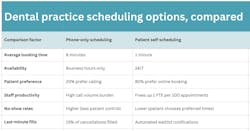
Each phone call to schedule an appointment lasts an average of eight minutes. That's eight minutes of your patient on hold, getting transferred, or trying to coordinate calendars during their busy workday. Meanwhile, the same appointment can be booked online in one minute.
Think about your own life. Between work deadlines, family obligations, and everything else, when do you actually have eight uninterrupted minutes during business hours for a scheduling phone call? For most busy parents, the answer is never.
Here's what happens when families encounter phone-only scheduling:
The privacy problem: Parents don't want coworkers overhearing conversations about their child's dental needs during work hours.
The time crunch reality: Finding 8 minutes for a phone call during business hours feels impossible when they're juggling work meetings and family responsibilities.
The hold music nightmare: Getting put on hold during their limited free time sends parents straight to your competitors.
The practices still requiring phone calls aren't just inconveniencing patients; they're actively selecting against busy families who could become their most loyal patients.
Patient self-scheduling saves your team 1 full day per week
Your dental team is already stretched thin. Between patient check-ins, insurance verification, treatment coordination, and answering phones, your front desk juggles an impossible number of responsibilities.
Every scheduling phone call takes an average of 8 minutes. If your practice books 100 appointments per month via phone, that's 800 minutes (13+ hours) your team spends just on scheduling. That's nearly two full work days consumed by a task that can be automated.
Patient self-scheduling frees up one full-time equivalent (FTE) for every 100 appointments that would have been scheduled via phone. Think about what your team could accomplish with 13 extra hours each month:
- More time for meaningful patient conversations during check-in
- Better insurance verification and pre-treatment estimates
- Improved follow-up on treatment plans and recall appointments
- Enhanced patient care and relationship building
Patient self-scheduling doesn't replace your team; it liberates them to do what they do best.
Why 24/7 scheduling access fills your chair every day
Your practice operates 8 AM to 5 PM, creating an impossible situation for working parents who have the same schedule with limited phone access during their workday.
Patient self-scheduling solves this by allowing families to book appointments 24/7. The results are dramatic:
Last-minute appointment fills: When someone cancels at the last minute, online scheduling can automatically notify patients who want earlier appointments. Since 90% of dental offices aren't using automated waitlists, typically only 15% of canceled appointments get filled through traditional methods.
After-hours booking: When parents suddenly remember their child needs a cleaning or their own recall is overdue, they want to book immediately.
Real practices see this impact immediately. Nearly 73% of patients book their appointments after hours when given the option. That means the majority of your potential appointments are happening when traditional practices are "closed" for scheduling.
One Missouri family practice saw appointments jump from 19 to 819 in four months simply by making scheduling available around the clock.
Self-scheduling patients show up more
Here's something that surprises most dentists: patients who book their own appointments online are more likely to actually show up than those who schedule over the phone.
Research from the Journal of Medical Internet Research shows patients are significantly more likely to attend appointments they scheduled themselves online. While the exact reason isn't completely clear, it likely comes down to patient engagement and control.
When patients choose their own appointment times rather than accepting whatever slot is available during a phone call, they're more invested in keeping that appointment. They selected a time that genuinely works for their schedule instead of being pushed into something inconvenient.
The financial impact is substantial:
Reduced no-show rates: Self-scheduled patients have higher attendance rates because they picked times that work for their actual schedules.
Easier rescheduling: Online systems let patients easily cancel or reschedule when necessary, reducing last-minute no-shows.
Automated waitlist management: When someone cancels, automated notifications can fill that slot immediately with patients wanting earlier appointments.
Lost revenue recovery: Every prevented no-show protects your daily production goals and maintains practice efficiency.
The productivity improvements create additional savings beyond just preventing no-shows. When your team spends less time on routine phone scheduling, that time becomes available for revenue-generating activities like treatment planning, patient education, and practice growth initiatives.
This concept of reducing friction throughout your patient experience, from initial scheduling to treatment completion, is so critical that My Social Practice created an entire guide called "The Frictionless Future" showing how removing barriers leads to more patients and less stress.
When you add it all up, patient self-scheduling doesn't just improve convenience; it directly improves your bottom line through better attendance rates, reduced administrative costs, and more efficient use of your team's expertise.
Patient self-scheduling as your competitive advantage
While some practices resist online scheduling, the data shows this technology isn't optional anymore; it's become a competitive necessity.
80% of patients now prefer doctors who offer online scheduling. For dental practices still requiring phone calls, this means they're automatically excluded from consideration by 4 out of 5 potential patients.
Consider the patient journey from a busy parent's perspective:
Practice A (phone-only): Find practice online, write down phone number, remember to call during business hours, wait on hold, discuss availability, coordinate calendars, hope for confirmation call later.
Practice B (self-scheduling): Find practice online, click "Book Appointment," see available times, pick one that works, get instant confirmation, done in 60 seconds.
Which practice would you choose?
The practices embracing patient self-scheduling aren't just keeping up with expectations; they're exceeding them and growing faster than competitors still stuck in phone-first thinking. For modern practices, offering patient self-scheduling has become as essential as having a website or accepting insurance.
Your team will thank you (and so will your schedule)
Every scheduling call that can be automated frees up your front desk team for higher-value work.
Online scheduling reduces no-shows and cancellations by allowing patients to select times that they know will work for them rather than pushing them to modify their schedule. When parents choose their own appointment times, they're more likely to show up.
The technology also eliminates common scheduling mistakes. True online dental schedulers sync in real time with your practice management software, preventing double bookings and ensuring your schedule stays accurate without manual updates.
Your team gains time to focus on what matters most:
- Building relationships with patients during check-in
- Helping with treatment planning and insurance questions
- Following up on care plans and recall appointments
- Providing the personal touch that technology can't replace
Rather than replacing your team, online scheduling empowers them to do their jobs better.
Ready to join the 80% of practices that understand patient self-scheduling isn't optional anymore? The shift from phone-first to patient-controlled scheduling has moved beyond convenience into competitive necessity.
When busy parents can schedule dental appointments in one minute instead of eight minutes of phone tag, everyone wins. Your team gains productivity, your schedule fills more efficiently, and your patients get the modern experience they expect.
Editor's note: This article originally appeared in The Bottom Line with Dental Economics, the newsletter that will elevate your inbox with practical and innovative practice management and clinical content from experts across the field. Subscribe here.
FAQ
Q: Do I need online scheduling software for my dental practice?
A: With 80% of patients preferring doctors who offer online scheduling and busy families unable to call during business hours, online scheduling has become essential for staying competitive and accessible to modern patients.
Q: What are the benefits of online appointment booking for dental offices?
A: Online booking reduces phone calls by 8 minutes each, prevents no-shows through better patient engagement, fills last-minute cancellations automatically, and frees up staff time for revenue-generating activities instead of routine scheduling tasks.
Q: How does online scheduling software reduce no-shows?
A: Patients who book their own appointments online are more likely to attend because they choose times that genuinely work for their schedules. Research shows online scheduling significantly improves attendance rates compared to phone booking.
Q: Can online scheduling software integrate with my current dental practice management system?
A: Most modern online scheduling solutions integrate seamlessly with popular dental practice management systems, automatically syncing appointments and patient information to eliminate double-booking and reduce administrative errors.
Q: Is online appointment scheduling worth the investment for small dental practices?
A: Absolutely. Even small practices see immediate returns through reduced staff time on phone calls, better appointment attendance, and the ability to capture patients who prefer booking online over calling during business hours.
About the Author
Danielle Caplain
Danielle Caplain is a copywriter at My Social Practice, where she crafts compelling, SEO-friendly content that helps dental practices grow their online presence and connect with patients. My Social Practice is a dental marketing company that provides comprehensive dental marketing services to thousands of practices across the United States and Canada.