Why patients want to trust science more than influencers when it comes to oral care products
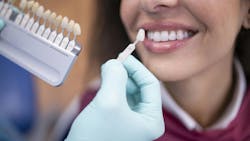
What do patients and consumers of oral health products want to see when they make a purchase these days? Experts at Conran Design Group believe direct-to-consumer oral care is shifting toward a scientific approach after being domineered by social media and influencer-backed recommendations for the past few years.
Jonathan Finer, associate managing partner and brand strategist who has collaborated with oral care mainstays like Listerine and Opalescence, shares his insight and predictions for the future of product marketing, teeth whitening, and how new dental technology is fueling this shift in consumer mindset.
What is causing the consumer shift back toward clinically-guided solutions and realistic results?
"Consumer trust tends to move in cycles. We've seen this before—from the era of 'four out of five dentists recommend' to a backlash against perceived inauthenticity, and then into the influencer-led phase where personal anecdotes often outweighed clinical evidence. That influencer phase dramatically expanded access and awareness, but it also exposed consumers to inconsistent outcomes and, in some cases, real oral health risks."
"What we're seeing now is a recalibration. Consumers are still visually driven and socially influenced, but they're increasingly skeptical of quick fixes. Credible dental science—when communicated clearly, sincerely, and without exaggeration—is regaining authority. Patients want results that look good and feel responsible, and that naturally bring clinicians back to the center of the conversation."
Teeth whitening grows in popularity
With social media still touting the pearl-white look as the optimal standard for dental esthetics, there has been an increased demand for whitening procedures and products.1 Understanding current trends allows dental professionals to help patients achieve their esthetic goals.
What changes have you seen—and what do you foresee—within the whitening market?
"Whitening has shifted from a special occasion, in-office procedure to an everyday component of oral-care routines. That democratization has been powerful, but it's also led to wildly uneven results and confusion about safety and efficacy."
"Looking ahead, the challenge—and opportunity—is balance: delivering visible results that are accessible and convenient without compromising long-term oral health. As consumers increasingly expect to be 'camera-ready' at all times, the market must solve a complex equation—one that integrates efficiency, affordability, professional guidance, and sustained enamel health. The brands and practices that succeed will be the ones that frame whitening as part of overall oral wellness, not a standalone cosmetic shortcut."
Are there any specific scientific advancements or cutting-edge dental tools propelling this shift?
"Yes, several. Advances in peroxide delivery systems, remineralization technologies, and sensitivity-mitigation ingredients are making whitening safer and more predictable. We're also seeing growth in hybrid care models, where digital diagnostics, AI-supported treatment planning, and dentist-approved at-home systems work together rather than in opposition."
"Equally important is progress in patient education tools—visual diagnostics, enamel monitoring, and clearer clinical explanations—which help patients understand why certain approaches are recommended. These innovations support a more informed consumer who values guidance over gimmicks."
How can dental professionals adapt to this change—and what should they expect to hear from patients?
"Dental professionals should expect patients to frame whitening less around one-time milestones (like weddings or events) and more around sustainable, ongoing solutions. Patients are asking: What's safe? What's realistic? What can I maintain long-term—both in-office and at home?"
"This creates an opportunity for dentists to reposition themselves as partners in esthetic maintenance, not just problem solvers. Practices that clearly explain trade-offs, personalize treatment plans, and connect cosmetic outcomes to oral health will be best aligned with evolving expectations."
Social media's role in consumer perception
Do you believe TikTok and other social platforms are positively affecting the cosmetic dental industry?
"Without question—though not without complications. Social media has been a major disruptive force, accelerating interest in cosmetic dentistry and normalizing conversations about smiles and self-image. There's nothing inherently negative about wanting to look confident on camera."
"The challenge arises when esthetic obsession, combined with low barriers to entry for new products, promotes short-term fixes that may undermine long-term oral health. We're now entering a more mature phase where the industry must respond—not by rejecting social influence, but by counterbalancing it with credible education and professional stewardship."
Finer concludes by noting that the broader shift isn't about rejecting esthetics—it's about redefining them. He believes the future of cosmetic dentistry lies in integrating beauty with biology and making sure patients care for their teeth long-term.
Reference
-
Cosmetic teeth whitening may be more popular than ever. ADA News. https://adanews.ada.org/huddles/cosmetic-teeth-whitening-may-be-more-popular-than-ever/
About the Author
 Sarah Butkovic, MA, BA
Sarah Butkovic, MA, BA
Sarah Butkovic, MA, BA, is an Associate Editor at Endeavor Business Media, where she works on creating and editing engaging and informative content for today's leading online dentistry publications. She holds a Master's English Language and Literature from Loyola University Chicago and is passionate about producing high-quality content that educates, inspires, and connects with readers.