January 2026 Pearls for Your Practice
Key Highlights
- Max Crown Spreader: As zirconia crowns have made removal far more complex, the ArtCraft Dental Max Crown Spreader provides controlled, efficient separation that preserves tooth structure, saves time, and restores sanity during modern crown removals.
- J Barber Clinical Attire: Lightweight, breathable, and purpose-built clinical jackets designed by dentists to enhance comfort, function, and professional presentation throughout the day
- Epitex Strips: Ultrathin, strong, color-coded finishing strips that streamline interproximal polishing by providing smooth handling, consistent results, and zero workflow interruptions
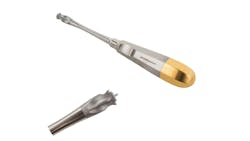
Max Crown Spreader by ArtCraft Dental
Passwords used to be easy. I had one password for everything. Now every website wants 16 characters, one capital letter, three numbers, a symbol, and a blood sample. And you can't reuse anything you have ever used since the dawn of time. Logging into my bank account feels harder every year. Something that used to be simple has become way more complicated. If I have to do another two-factor authentication, I may die of aggravation.
Crown removal feels a lot like that now. Back when most crowns were PFMs or porcelain fused to metal, you could usually pop them off with a little patience and a decent crown spreader. Even e.max crowns were manageable. But zirconia has changed the entire game. These crowns are tough, dense, and incredibly strong—great for patients, but every dentist knows the other side of that coin. When these crowns need to come off, it is now a full production. You cannot just wiggle or pry like you used to. You need the right tool if you want to preserve tooth structure, avoid unnecessary sectioning, and maintain sanity in the operatory.
Read last month's Pearls: November/December 2025 Pearls for Your Practice
That is where the ArtCraft Dental Max Crown Spreader shines. It is designed specifically for the world we practice in today. It grips firmly and reliably, allowing you to apply controlled force so the crown can actually separate along your section lines. The jaws are shaped in a way that gives you mechanical advantage without feeling bulky or awkward. It feels intentional, not like a repurposed elevator from your surgery kit.
The real value of this instrument is how it helps you work smarter. With zirconia, you often need to section carefully in one or two spots, then rely on a spreader to do the rest. The Max Crown Spreader is strong enough to open up those cuts without slipping or digging into the tooth. It gives you that satisfying moment where the crown finally releases instead of forcing you into five more minutes of cutting and sweating. In a world where we are seeing more zirconia than ever, that moment matters.
What I appreciate is how much control it gives you. You are not muscling your way through a removal. You are guiding it. You get better visibility, better angles, and better outcomes. And you save time, which is priceless. Every dentist knows that once you get behind, it is hard to catch up. A tool that preserves enamel, trims minutes off a tricky removal, and reduces the stressful part of the appointment is absolutely worth having in the drawer. The more zirconia we see, the more instruments like this become essential. Passwords and logins have gotten harder over the years and so has crown removal. Thankfully, at least one of those problems has a good solution. Solid double off the wall for the ArtCraft Dental Max Crown Spreader.
J Barber Clinical Attire
There’s nothing quite like walking into the operatory on a warm Texas morning, fully caffeinated, mentally ready for the day, only to remember you’re wearing a clinical jacket made from material that feels engineered to trap every bit of heat. It’s not the big procedures that trip me up. It’s that unrelenting sweat under thick, unbreathable fabric that chips away at my energy and morale. Loupes fog up. I sweat through my scrubs. Thick, heavy, clinical jackets are the worst.

I used to assume that was just part of the job. Plenty of clinical jackets are built like a second skin of armor—stiff, heavy, and impossible to cool down in this climate. Mine didn’t even look that good and every time I zipped it up, I felt like I was stepping into a portable sauna.
Then I discovered J Barber. It’s founded by Dr. Jessie Vallee and Dr. Jill Kinzer, two long-practicing dentists who know exactly what we go through. This company builds clinical jackets with purpose. Dr. Vallee is a Navy veteran with a background in fashion design. Dr. Kinzer practices alongside her husband, renowned Dr. Gregg Kinzer. Between them, they’ve designed clinical attire that breathes, stretches, and functions without sacrificing style.
Their jackets are made of double-weave crepe … structured yet flexible, moisture--repellent, and wrinkle-resistant. They don’t trap heat the way other jackets do. Instead, they keep you cool, dry, and fully present during long procedures. Details like dual-access pockets with cable pass-throughs, a stand-up collar, and polished cuffs were shaped with real clinical workflows in mind.
Since switching to J Barber, I’ve noticed subtle but meaningful changes: no more midmorning overheating, and no more mental check-ins of “Should I take this damn hot jacket off already?” My whole day feels smoother. My team has switched too. Patients have started complimenting the clean, modern look. That little boost in presentation translates into confidence chairside.
J Barber’s mission is clear: elevate professional medical apparel by blending function, comfort, and style—without reinventing scrubs. When it comes down to it, performance gear should support how we work, not slow us down. A clinical jacket isn’t a patient’s priority, but wearing the wrong one can subtly degrade your performance over time. J Barber has solved the problem of oppressive, inflexible clinical attire.
Life in the operatory is often about granular improvements like reducing those small distractions so we can stay focused. J Barber jackets aren’t dramatic, but they’re deliberate. If there is one thing I’ve learned in this practice, it’s that sometimes small changes make all the difference. Hard hit double into the left field gap for J Barber!
Epitex Strips by GC America
You know that moment when you’re up on a ladder, fully committed to a home project like swapping out a light fixture or tightening up a squeaky ceiling fan, and you realize you left the screws back on the kitchen counter? You look down and think, “I could climb down, grab it, and start over …,” but you also consider just living with the broken light forever. It’s never the big stuff that throws you off; it’s the little interruptions that add friction to the task and break your momentum. As the old proverb says, it is not the big boulder in the middle of the road that causes the most frustration; it's the pebble in the shoe that does.
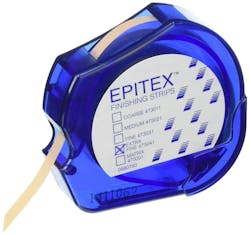
That’s exactly what it feels like when you’re finishing and polishing an interproximal composite and realize you don’t have a good way to clean up the contact area. You’ve done all this work for a nice contact, a solid seal, great contours, but then you’re left digging through your drawer for a finishing strip that isn’t garbage or doesn’t shred the second it touches a proximal box.
That’s why I keep Epitex finishing and polishing strips from GC stocked in my op. These things are exactly what I need, when I need them, and they don't fall apart on me halfway through. They’re ultrathin, flexible, and they come in different grits so you can be intentional about the polish you’re delivering—not just taking a rough pass and calling it a day.
What I appreciate most is how strong and predictable they are. You don’t get that annoying fray where it feels like you’re flossing with confetti. And because they’re color-coded by grit, I don’t have to squint to figure out if I’ve got the right one in my hand. These strips make a small part of the procedure a nonissue, which is huge when you’re trying to stay in rhythm and on time.
Epitex Strips also let me get just the right finish in tight interproximal areas without overpolishing or damaging adjacent teeth. And they don’t feel stiff or clunky when you’re using them. There’s a difference between a strip that just technically fits and one that actually feels good to use. These are the latter. They glide nicely, don’t buckle, and I don’t get nervous using them around delicate margins.
The thing I like most about the Epitex system is that you get a tray with a roll of all the grits that can live in your operatory within reach.
Finishing and polishing strips are one of those tools you don’t think much about until you don't have them. Then you’re stuck halfway up the metaphorical ladder, trying to decide if it’s worth climbing back down to fix a detail that shouldn’t have been hard in the first place.
Epitex finishing strips help you finish well, without friction. Keep a few packs in your op and save yourself the climb. Line drive single to the centerfielder for GC America.
Editor's note: The article appeared in the January 2026 print edition of Dental Economics magazine. Dentists in North America are eligible for a complimentary print subscription. Sign up here.
About the Author
 Joshua Austin, DDS, MAGD
Joshua Austin, DDS, MAGD
Joshua Austin, DDS, MAGD, is a graduate and former faculty member of the University of Texas Health Science Center at San Antonio School of Dentistry. Author of Dental Economics’ Pearls for Your Practice column, Dr. Austin lectures nationally on products, dental technology, online reputation management, and social media. He maintains a full-time restorative dentistry private practice in San Antonio, Texas. You may contact Dr. Austin at [email protected].
Updated June 21, 2023