In this article, you'll learn:
- What the Google May 2026 Core Update actually is—explained in plain language so you understand exactly what changed and why Google does this.
- How this update may have affected your dental practice's rankings—which content is rewarded, which slipped, and what that means for new patient flow.
- Why you should pause before panicking—the most important thing to do right now is not what most people think, and understanding the natural cycle of Google updates will save you from costly mistakes.

Think of Google Search like a giant library. Every few months, the head librarian reorganizes everything. Some books get moved to the front display case because they're more relevant and helpful. Others get shuffled to the back because better resources have come along. Nothing disappears. Everything just gets reordered.
That's essentially what a Google Core Update is.
On May 21, 2026, Google announced its second broad core algorithm update of the year, and by early June, it had finished rolling out. This is not a penalty aimed at any specific industry. It's a wide-reaching reorganization of how Google evaluates which web pages deserve top visibility for any given search, including searches for dentists.
Your dental SEO strategy isn't broken. Google just finished reweighing the scales, and now it's time to see where things landed.
Why this update is bigger news than usual
This core update launched just two days after Google I/O 2026, where Google announced "the biggest upgrade to our Search box in over 25 years," revealed that AI Mode has surpassed one billion monthly users, and introduced information agents that monitor the web around the clock on behalf of users.
Think of it like your family van getting a complete engine rebuild with full AI autopilot installed - all at once. The van still drives. But everything under the hood has changed, and the rebuild is now complete.
This matters for dental practices because Google is increasingly answering patient questions through AI-powered summaries rather than listing websites to click. Google's Gemini AI now pulls directly from your Google Business Profile to deliver rich, direct answers in search, meaning practices that show up there are the ones Google has deemed genuinely trustworthy. Understanding SEO for dentists in this new era means accepting that the bar for "good enough" just got permanently raised.
What Google is actually rewarding (and what it isn't)
Here's what SEO experts have confirmed since the rollout completed.
Google is rewarding:
- Content that genuinely helps patients answer real questions
- Named providers with visible, authentic clinical expertise
- Strong trust signals - consistent reviews, accurate business info, maintained Google Business Profile
- Fast, mobile-friendly websites that are easy to navigate
- Original content that goes beyond what every other dental site already says
Google is pulling back on:
- Thin, generic content created to rank rather than to help
- Pages that avoid directly answering the patient's question
- Sites that look SEO-optimized on the surface but lack real depth
- Content that could apply to any practice anywhere
The analogy here is patient reviews. One dentist has reviews that say "great, highly recommend." Another has reviews that say "Dr. Chen took 20 minutes to explain exactly why my crown was failing and gave me three options." Google has gotten much better at telling the difference - and this update rewards the second dentist more than ever.
Your content signals expertise to Google, SEO copywriting is a great place to start. To understand what Google's AI systems want, this guide to AI-ready dental content is worth your time.
How the May 2026 update connects to AI search
This is the part that makes this particular update bigger news than most.
Google has built a brand new reading room alongside its library, one where an AI assistant summarizes the best books before visitors even pull one off the shelf. That's what AI Mode and AI Overviews do. Google's AI Overviews now sit above traditional search results and can either amplify or erase a dental practice's visibility entirely.
It's no longer just about ranking number four versus number seven. It's about whether your practice becomes a source Google's AI trusts enough to cite when a patient asks "what's the best dentist near me who does same-day crowns?" AI search engines now generate full answers instead of sending users to websites, only practices with authoritative, well-structured content make the cut.
The good news? AI for dental SEO is a growing opportunity for practices already investing in quality content. The path to AI visibility runs through the same things Google has always valued: trustworthiness, expertise, and helpfulness.
What may have happened to your rankings
Now that the update has wrapped up, here's a realistic picture of what practices have been seeing.
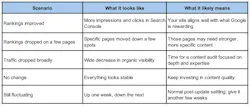
The most common mistake after a core update is rewriting large sections of your website based on early data. Rankings often continue shifting for weeks after the official end date, and reactive changes made too soon frequently introduce new problems.
For practices focused on ranking on Google Maps for dentists, local pack results may also still be settling. If you suspect deeper structural issues, consider using this practical dental website SEO checklist covering the technical factors Google now weighs most heavily.
The E-E-A-T Framework: What it means for your practice
E-E-A-T stands for experience, expertise, authoritativeness, and trustworthiness—Google's quality framework for websites, especially in health-related fields. The May 2026 update tightened the screws on all four. Dental practices must now demonstrate real topical authority and local trust signals to be selected as a source in Google's AI-generated summaries.
- Experience: Procedure pages with specific clinical detail, real patient stories (with consent), and genuine insight - not generic descriptions.
- Expertise: Named providers with visible credentials and affiliations. Not just "our experienced team."
- Authoritativeness: Consistent reviews on Google, Healthgrades, and Yelp. Backlinks from reputable dental or local sources.
- Trustworthiness: A secure, accurate site where your contact information matches your Google Business Profile everywhere.
Healthcare websites have always been held to a higher standard, and that bar just moved up. Working with a dental marketing company that understands this framework can make the difference between slipping and holding your ground. GEO now works alongside SEO to determine how AI assistants recommend dental practices to patients.
What to do now that the dust has settled
Do this:
- Log into Google Search Console and compare the past four weeks against the four weeks before May 21. Look for patterns across pages, not just individual keywords.
- Audit your Google Business Profile—hours, address, phone, photos, and services should all be current.
- Review pages that lost traffic and ask honestly: does this page answer a patient's question better than anything else they could find?
- Make sure provider bios include real credentials and something personal - not just a stock photo and two sentences.
Don't do this:
- Overhaul your entire website based on a few weeks of post-update data.
- Panic because one keyword dropped.
- Assume a dip is permanent before rankings finish settling.
If your practice has been investing in search terms and dental SEO fundamentals, you're building on the right foundation. For a structured post-update review, read six concrete steps that align with what this update rewards. Multi-location groups and DSOs should also check this AI Overviews breakdown before making any site-wide changes.
We're all in this together
Every time Google completes a core update, the same pattern plays out. Some practices see gains. Others see dips. Most see both. Things almost always look different at the four-week mark than right after the rollout ended.
Spikes and dips are completely normal - they're part of how Google's systems find their new equilibrium. The practices that come out in the best shape stay calm, wait for data to stabilize, and make thoughtful improvements based on what they actually see.
So take a breath. Give your analytics a few more weeks. Then respond with intention, not anxiety. Your patients still need a great dentist. Google still wants to send them to you. This update is just Google getting better at making that match.
FAQ
Q: What is the Google May 2026 Core Update and does it affect dental practices?
A: It's a broad algorithm change that rolled out from May 21 through early June 2026, reshuffling rankings across all industries—including dental. Practices with thin or generic content have seen dips, while those with genuine expertise and helpful content have benefited.
Q: Why did my dental website's ranking drop after the update?
A: A drop doesn't mean your site was penalized. Google re-evaluated which pages best match searcher intent, and some shifts are still settling. Use Search Console to identify which pages moved and whether they truly answer patient questions in depth before making any changes.
Q: How long does it take for rankings to stabilize after a Google core update?
A: Even after an official end, rankings can shift for another two to four weeks. Most SEO experts recommend waiting at least three to four weeks before drawing conclusions or adjusting content.
Q: What kind of dental content does Google reward after this update?
A: Content that genuinely helps patients, reflects real clinical expertise, includes named providers with credentials, and offers specific original value. Pages that directly answer questions and are backed by a trustworthy online presence continue to perform best.
Q: Should I redesign my dental website because of this update?
A: Not based on early data alone. Identify which pages lost visibility using Search Console, then make targeted improvements. Sweeping redesigns based on incomplete data often create more problems than they solve.
About the Author
Danielle Caplain
Danielle Caplain is a copywriter at My Social Practice, where she crafts compelling, SEO-friendly content that helps dental practices grow their online presence and connect with patients. My Social Practice is a dental marketing company that provides comprehensive dental marketing services to thousands of practices across the United States and Canada.