Achieving optimal hemostasis in restorative dentistry
Key Highlights
- The most effective modalities for achieving hemostasis in restorative dentistry, from pressure and topical agents to local anesthetics and soft-tissue lasers
- How to select the right hemostatic tools for different clinical situations, including anterior vs. posterior teeth and thin vs. thick gingival phenotypes
- Tips for integrating multiple hemostasis techniques to improve restoration outcomes, reduce stress, and save time in daily practice.
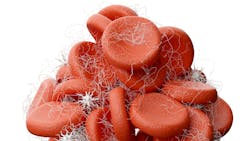
Hemostasis is the basis for any great outcome in restorative dentistry. Contamination with heme will lead to an almost immediate failure of our restorations, leading to more time and more lost revenue with a loss of confidence from our patients. This is a snowball effect that we, as dentists, should not experience in today’s day and age.
While there are many tools available at our disposal, I commonly utilize four separate modalities in my current practice to avoid dreaded complications from a lack of hemostasis in my restorative procedures. Along the way, I’ve found that these modalities work for me, and while not an exhaustive list, there are sure to be other ways to achieve hemostasis.
Pressure, an overlooked aspect of hemostasis
Pressure in the area of bleeding during a procedure is an overlooked aspect of hemostasis. While pressure is often an inconvenient method of hemostasis due to its inherent time component, it is truly a very effective modality. I like to think of this as belonging to the “slow down to speed up” moniker, which is critical in dentistry. Oftentimes, we feel like three to five minutes is an eternity. Still, when I need to achieve hemostasis in a crucial aspect of my restorative procedure, I will utilize time and pressure to my advantage. Typically, I will perform a few hygiene checks while waiting for my hemostasis to be achieved. I remain efficient while simultaneously giving enough time to achieve my desired outcome.
An example of a commonly used pressure applicator is retraction cord. Besides displacing gingival tissue away from the tooth itself, it applies constant pressure to the tissue directly adjacent to where your restorative interface will be. A favorite product of mine is Premier’s Knit-Pak+. Its knitted design prevents minifibers from clinging to the tissue after the allotted waiting time between placement and impression/restoration. While I pay close attention to the patient’s gingival phenotype (i.e., thick vs. thin), I often use a combination of a size 00 with a size 2 as my second cord, utilizing the two-cord technique. Patients with a thin gingival phenotype will receive a double-looped length of size 0 or 1, while patients with a thick gingival phenotype might receive a
double-looped size 2 cord.
Another great tool to have is an anatomical cotton cap. Premier Dental has anatomically shaped caps that we can place over a tooth that has been prepared for a crown and place pressure along the margins via the patient biting down. I use these caps in conjunction with the retraction cord and sometimes with retraction paste (a topical hemostatic agent) during deeper preparations.
My favorite retraction paste is made by Voco Dental. Its color is a bright teal that comes in an easy-to-use compule that will fit in any standard composite dispensing gun. Simply place it over the area and wash it away after letting it sit for one to two minutes.
Topical hemostatic agents
Speaking of retraction paste, it belongs in the category of topical hemostatic agents. While retraction paste is far from my most used topical hemostatic agent, it still has its place in my armamentarium. Instead, I often find myself using a product like Astringent X or ViscoStat Clear by Ultradent.
Astringent X is iron-based with components of ferric sulfate and ferric subsulfate that provide an almost immediate chemical coagulation of difficult-to-control bleeding. I use it most often in the posterior or soak my retraction cord in the solution prior to placement. The downside to Astringent X is that it produces a coagulum after it contacts blood. This must be cleaned away from the preparation zone before placing the restoration or taking an impression.
In cases where I want no possible cross-contamination with precipitate, I choose to use ViscoStat Clear. ViscoStat Clear is an aluminum chloride-based hemostatic agent that works well for minor bleeding and is especially critical in the esthetic anterior zone. This is one of my favorites if I am placing any anterior restoration or cementing an anterior crown/veneer. Since it does not produce a coagulum and it is clear, there is no compromised bonding protocol to allow for possible bleed-through of unwanted heme in the esthetics of the restoration.
Local anesthetic, a next step in hemostasis
A localized approach is the most direct and often all you need to achieve hemostasis. It’s one of the first things we are taught in dental school. Pressure and time will certainly achieve hemostasis, but when those don’t achieve our desired effect, we should look to local anesthetics as the next step. While I typically utilize local anesthetics with a 1:100K epinephrine concentration in my normal day-to-day administration, I find that it can fall short in certain clinical situations. Typically, those are for patients with a thin gingival phenotype or in the presence of large amounts of inflammation. However, local anesthetics with double the concentration of epinephrine (1:50K epi) can be a nice tool in our back pocket in situations where we would like a quick fix for hemostasis issues.
Soft-tissue diode lasers for hemostasis and other procedures
My favorite and most effective tool to achieve hemostasis is a soft-tissue diode laser. Using a laser in a restorative procedure provides an instantaneous hemostasis that allows for an immediate transition to the next step of my restorative procedure. I also utilize my laser for surgical procedures such as removing growths, performing frenectomies, soft-tissue recontouring, and of course, achieving hemostasis to reduce the need for sutures or other hemostatic measures.
While hemostasis is the topic of this article, there are a plethora of other benefits to using a laser for restorative procedures. This would include increased precision and control, reduced postoperative discomfort, faster healing time, and reduced amount of anxiety for patients, just to name a few. With the numerous benefits that something as simple as a soft-tissue diode laser can bring, I’d encourage you to evaluate adding one to your practice.
I’ve had the pleasure of using several models and brands, so I am intimately familiar with their use and capabilities. Out of every soft-tissue laser I have used, I have had a hard time finding one that beats DentLight’s handheld “pen-type” Ultrafast laser in terms of construction quality, versatility, ease of use, and cost. Its aircraft aluminum is durable and protects against accidental drops. Additionally, as it is wireless, it has a long-lasting rechargeable battery that can be used for 45 minutes of working time between charges. This frees up valuable countertop space in the operatory.
Another one of its unique design choices is the use of a distinctive green aiming beam, which stands out from tissue and blood, allowing for easier precision of where the tip is during use. In terms of its power output, the Ultrafast laser allows for up to 3 watts at continuous power and 5 watts at pulsed power. While 3 to 5 watts is more than sufficient for most instances, increasing the power output to achieve hemostasis during instances of heavy bleeding is invaluable.
The battery life on a single charge is significant at 45 minutes of use and has a fast recharge option of 90 minutes. I love my Ultrafast laser and use it multiple times a week. It has a great ROI when considering the time and aggravation that I save with my laser. Additionally, a soft-tissue diode laser has such a wide range of uses beyond hemostasis that you’ll find yourself using it for other procedures in no time.
In conclusion, hemostasis is an everyday concern for restorative dentists. Using multiple modalities is both efficient and critical to having an ideal outcome for our work. Having the proper tools to add to our armamentarium is both critical for outcomes and ideal for reducing stress. Relying on one or two modalities for every situation is unrealistic, in my opinion, so I would encourage readers to speak with their friends and colleagues about what they use in their offices.
Editor's note: This article appeared in the November/December 2025 print edition of Dental Economics magazine. Dentists in North America are eligible for a complimentary print subscription. Sign up here.
About the Author
 Neville T. Hatfield, DMD
Neville T. Hatfield, DMD
Neville T. Hatfield, DMD, graduated magna cum laude from the Boston University School of Dentistry. He completed a general practice residency at the Manhattan Veteran Affairs Hospital, where he provided interspecialty comprehensive prosthetic and surgical treatment to medically complex patients. When he is not treating patients in northern New Jersey, he enjoys lecturing about dental materials and products.
Updated April 7, 2023