Building patient trust—clinically and psychologically
Key Highlights
- Transparency builds trust: Present multiple treatment options (ideal, phased, and limited) with clear pros/cons to support informed consent and reduce patient skepticism about financial motives.
- AI enhances patient understanding: Tools for radiograph interpretation improve case acceptance primarily by visually educating patients, even though diagnostic accuracy is similar to clinicians.
- Communication and environment matter: Taking time to explain, listen, and create a calm, supportive clinical experience significantly reduces anxiety and strengthens patient confidence in care recommendations.
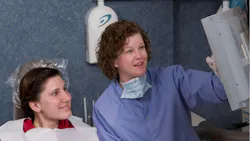
Each month, Dr. Gordon Christensen answers a question from readers about everyday dentistry.
Q: I feel a covert financial emphasis is currently present in dentistry and other parts of medicine. Many ads emphasize the potential revenue increase incorporating a certain technology, material, concept, or procedure will provide to dental practice. I find some patients are wary when I suggest any type of treatment for them where the condition is not causing pain, bleeding, or obvious esthetic challenges. What can I do reduce this frustrating impediment to treatment?
A: Unfortunately, your observations are all too true. Our profession has been changing for many years from a service-oriented profession to a money-oriented job! We dentists and physicians must make money to support our families, but to make money, our primary goal eliminates our professional status. It is my observation that most dentists are honest and service-oriented, but all vocations are being forced by inflation and other reasons to focus more on revenue.
I will share clinical and psychological concepts you can use to reduce patients’ anxiety and to build confidence and trust in your patients.
Radiograph interpretation
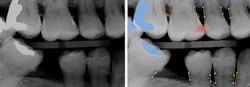
It is well known by mature dentists that digital radiographs are not as diagnostic as previous analog radiographs. Small carious lesions or other small potentially pathological conditions are difficult to interpret and diagnose. AI is now helping not only to see these conditions but also to educate patients about them.
The two most currently popular products are Overjet and Pearl (figure 1), but there are many other companies getting into this area.
The observations and conclusions I will express about this concept have been largely developed from my many continuing education courses and asking users of this AI about the concept validity and the practice value.
The user opinions about AI analysis of radiographs are clear:
- The main value is educating patients.
- Acceptance of treatment plans is increased.
- The less valuable factor is identification of caries or other pathology where both AI and HI (human intelligence) find about the same potential lesions or unknowns.
- False positives and negatives are reported for both popular companies.
- Most feel the approximately $300–$500 per month is worth the patient education value and the occasional finding of additional pathology.
- Documentation of insurance claims is easier.
There is no question that when patients can see the color enhancements of caries and periodontal disease, they have more confidence and trust in the practitioner.
Presenting potential treatment plans
In the past few years, I have observed numerous patients as a second opinion who have been told they need whatever the previous dentist has told them. Often this is an all-on-X treatment plan. Usually, they have not been provided with other treatment alternatives. This type of treatment plan presentation is not acceptable. To have legally acceptable informed consent, patients should be presented all the treatment alternatives, and the patient and dentist should agree on what treatment should be done.
Additional reading: Do your patients understand what you are doing?
I suggest the following example discussion with patients when they have several potential alternative treatment plans (figure 2). A sequence for treatment should be presented for each of the potential treatment plans:
- An ideal plan for the specific clinical situation
- A piecemeal, segmented plan over a period of time
- A plan that takes the patient out of pain or an esthetic challenge pending later treatment

I suggest the treatment plan should be signed and dated by the patient, the dentist, and a staff member.
Presenting the treatment plan
It’s essential you take sufficient time when presenting treatment plans. It’s important to understand how the patient is feeling. Dentistry is expensive! Some patients have negative feelings about previous dentists and the treatment they have received. Letting the patient express their concerns and honestly telling them the advantages and disadvantages of each plan is essential to gain their trust.
A phrase I use routinely after presenting several plans to a patient is, “If I were you, and I had the desires and needs you have expressed to me, I would favor plan X.” If they deny such plan, move to your second choice.
After this type of treatment plan presentation, patients sense your personal concern for them and their oral challenges. They develop trust in you and your team.
You, your team, and your office—a peaceful environment
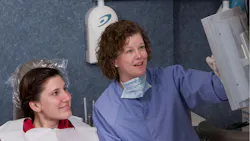
We dentists often forget most patients know little about dentistry. We know it well, but our explanation of dental techniques and treatments are foreign to patients. Slow down! Involve competent, educated staff with patient education (figure 3). It is well known that most women educate well and some men do not do so. If you perceive the patient is not understanding what you are telling them, repeat it.
I talk constantly while treating a patient and suggest the following for your consideration. Comments like these expressed peacefully and confidently can calm the patient:
- Are you comfortable?
- This procedure will be almost painless.
- Please tell me if you are in any way uncomfortable.
- Do you need a pillow for your head?
- Your mouth has been open for a long time; let me massage your facial muscles.
- Would you like a break?
- I am putting some lubrication on the corners of your mouth.
- We are about halfway finished.
- I need only a few more minutes to finish.
- You will have only minor discomfort for about one day (or whatever time is appropriate).
- Everything went very well with your treatment.
- Call us if you have any questions when you get home.
- We will contact you soon to see how you are doing.
Often, I like to draw a diagram specifically showing what I am doing for the patient. A knowledgeable patient is a comfortable patient. An unknowing patient is uncomfortable, tense, eager to leave, and often difficult to treat.
Summary
All health science professions have changed significantly over the past few years from a professional model to a more business-oriented model. Some changes have been good, and some have frustrated practitioners. Dentists and physicians are finding patients to be more money conscious and critical of preventive and treatment costs.
This article includes some ways dentists can reduce this challenge by providing complete treatment plans with their advantages and disadvantages and educating patients about their specific needs and elective treatment desires.
Editor's note: This article appeared in the June 2026 print edition of Dental Economics magazine. Dentists in North America are eligible for a complimentary print subscription. Sign up here.
About the Author

Gordon J. Christensen, DDS, PhD, MSD
Gordon J. Christensen, DDS, PhD, MSD, is founder and CEO of Practical Clinical Courses and cofounder of Clinicians Report. His wife, Rella Christensen, PhD, is the cofounder. PCC is an international dental continuing education organization founded in 1981. Dr. Christensen is a practicing prosthodontist in Provo, Utah.