Buffered anesthetic: The new standard of care
Key Highlights
- Buffered anesthetic improves the patient experience. By neutralizing the acidity of traditional anesthetics, buffering reduces injection pain, speeds onset, and can improve anesthetic success.
- A new standard of care is emerging. With modern systems making buffering simple, fast, and affordable, practices can now deliver more comfortable and efficient anesthesia.
- Informed consent now includes anesthetic options. Dentists have a legal and ethical responsibility to disclose buffered versus nonbuffered anesthesia so patients can participate in decisions about their care.
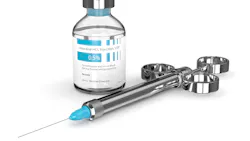
Local anesthesia has long been a routine part of dentistry, allowing for safer and more humane procedures. It is well-settled science that buffered anesthetic is superior to unbuffered anesthetic, but commercially available products were arguably not clinically or economically feasible. In 2025, buffered local anesthetic became simple and affordable, ushering in a new standard of care in local anesthesia.
Informed consent is not a formality; it is a legal and ethical duty grounded in patient autonomy. As technology evolves, professional legal and ethical obligations evolve correspondingly. Dentists must not only adopt evidence-based techniques that improve patient comfort and clinical efficiency, but also ensure patients are informed about meaningful treatment options, which now includes whether their anesthetic is buffered or nonbuffered.
This article explains why and how buffering has become the standard of care, and why informed consent now requires disclosure of local anesthetic options.
Buffering science
Commercially available dental local anesthetics containing epinephrine are very acidic (pH 3.5 is typical) to prolong shelf life. The acid is necessary for storage, but has negative clinical consequences, including pain on injection, slower onset of anesthesia, and reduced efficacy in inflamed tissues.
Local anesthetics exist in equilibrium between ionized (inactive) and nonionized (active) forms. Acidic solutions irritate tissue and cause pain, as well as pushing the drug into its ionized form, delaying onset. Adding sodium bicarbonate before administration removes the acid, and the result is clinically significant:
- Faster onset of anesthesia
- Less pain on injection
- Improved anesthetic success rate in many cases
These are not theoretical benefits; they directly impact the patient experience and procedural efficiency.
Patient comfort and efficiency
Comfort is not a luxury in the mind of the modern dental patient—it is an expectation and by far the most common metric that patients use to judge the overall competence of the practice. Olsen Research demonstrated that 58% of patients regard the injection as “… the worst part of the dental experience,” surpassing all other sources of patient anguish combined. Buffering improves the experience significantly by eliminating the burning sensation and reducing the patient’s wait time to get numb.
The evolution of the standard of care
The “standard of care” is not defined by tradition; it is defined by what a reasonably prudent dentist would do under similar circumstances, based on current knowledge and available technology. Standards evolve when evidence, feasibility, and patient benefit align. Not every innovation becomes mandatory, but provisions that significantly enhance patient comfort or safety, without adding material risk, often become expected.
Personal protective equipment, digital radiography, and advanced sterilization protocols are past examples of an evolving standard of care. Buffering has followed a similar path. Historically, buffering was impractical, requiring cumbersome (manual) mixing and the risk of nonsterility. Systems introduced in 2025 now allow precise and aseptic buffered anesthetic in seconds, and failure to use them is now impossible to justify in the mind of a patient.
Patient expectations in modern dentistry
Moreover, today’s patients expect transparency and participation in their health--care decisions. Given the information available, it is becoming common for patients to research their procedure(s) to gain some knowledge of what is involved. Learning after the fact about the existence of an anesthetic that reduces injection pain and time spent in the dental chair might reasonably cause them to ask why they were not informed beforehand.
The legal foundation of informed consent
Informed consent requires disclosure of:
- The nature of the proposed treatment
- The risks and benefits
- Reasonable alternatives
- The risks and benefits of those alternatives
Since buffered anesthesia is widely available, supported by peer-reviewed evidence, and offers meaningful clinical advantages with no downside, it now clearly meets the definition of a reasonable alternative.
Courts may apply both the “reasonable physician” standard (what a typical practitioner would disclose) and the “reasonable patient” standard (what a typical patient would want to know). Under either approach, the availability of a less painful injection method would be significant and material information when deciding on treatment.
Thus, even if buffered anesthetic is not used for some reason, failure to inform patients of the option may expose the practice to risk, particularly if a patient later alleges unnecessary pain.
Risk management considerations
From a risk management perspective, three realities are worth considering:
- Failure to disclose will be scrutinized. In litigation, plaintiffs’ experts will certainly testify (compellingly) that buffered anesthesia represents a safer or more patient-centered alternative. Nondisclosure would be difficult to defend. Informed consent is not about mandating use; it is, however, about allowing patients to participate in the decision.
- Documentation matters. If buffering is not offered for some reason, documenting the reason why, and the fact that it was discussed, strengthens informed consent.
- Selective use may require explanation. If buffering is used only for certain patients (e.g., pediatric or surgical), consistency and rationale should be clear to avoid any impression of discrimination.
Ethical dentistry and patient autonomy
Beyond legal obligations lies the ethical foundation of dentistry. Respect for autonomy requires that patients are informed of meaningful choices affecting their care. Buffering does not change the fundamental procedure being performed, but it can change the patient’s experience of that procedure. For many individuals, particularly those with dental anxiety, that difference is substantial.
Ethical practice requires transparency, not paternalism. Even if a dentist believes the difference is modest, the patient may value it highly.
Practical implementation
Practices seeking to align with evolving standards should: (1) evaluate FDA-cleared buffering systems; (2) update consent forms to include anesthetic options; and (3) document patient acceptance or declination.
A simple addition to the consent process—“We offer buffered anesthetic, which can reduce injection discomfort and speed onset. Would you like to use that option today?”—will meaningfully enhance transparency and reduce legal liability and reputational risk to the practice.
Conclusion
In view of recent advances in buffering technology, dental clinicians must recognize not only the clinical advantages, but also the obligation to disclose its availability. As patient expectations rise and standards evolve, disclosing buffered anesthetic and discussing in contrast to nonbuffered options is both a legal and ethical obligation.
Editor's note: This article appeared in the April 2026 print edition of Dental Economics magazine. Dentists in North America are eligible for a complimentary print subscription. Sign up here.
About the Author
 Arthur C. DiMarco, DMD
Arthur C. DiMarco, DMD
Arthur C. DiMarco, DMD, is director and an affiliate assistant professor in the Regional Initiatives in Dental Education program at the University of Washington School of Dentistry in Spokane. He is also a professor of dental hygiene at Eastern Washington University in Cheney. Dr. DiMarco is a coauthor of the textbook, Local Anesthesia for Dental Professionals. He teaches many didactic and hands-on university and continuing education courses in local anesthesia for dentists, dental hygienists, and dental and dental hygiene students. Contact him at [email protected].
Adam G. Breeding, JD
Adam G. Breeding, JD, is the founding partner of Lake Norman Law Firm, Cornelius, North Carolina. For over a decade, Adam has provided turnkey legal representation for dental professionals. His practice recognizes dentists as a unique group of business owners and entrepreneurs who require personalized representation ranging from very dental-specific legal needs to holistic business-centered solutions. Reach him at (704) 765.1617 or [email protected]. Learn more about the firm’s dental-specific services at lknlawfirm.com/dental-specific-services/.