April 2026 Pearls for Your Practice
Key Highlights
- ArtCraft Dental Golden Retrievers—Precision-designed root retrieval instruments that provide sharp engagement, excellent tactile control, and predictable performance when managing fractured roots and stubborn root tips during extractions
- TheraBreath Anticavity Oral Rinse—An alcohol-free, sodium fluoride and xylitol rinse that supports remineralization, reduces cavity-causing bacteria, and improves patient compliance with a comfortable, great-tasting formula
- DentiMax Pro Sensor—A high-resolution, patient-friendly digital x-ray sensor that delivers crisp diagnostic images at a more accessible price point, with in-office trial options for added confidence before purchase
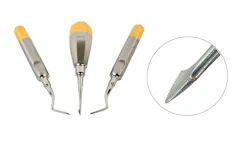
Golden Retrievers by ArtCraft
I have a goldendoodle named Graham, and I am completely obsessed with him. Graham loves people. Not in a casual way. In a full body, tail-wagging, cannot-
contain-himself kind of way. If you walk into my house, Graham assumes you are there specifically to see him. That personality comes from the golden retriever half. Anyone who has ever met a golden retriever knows exactly what I mean. They are dependable, friendly, and always show up ready to help.
That same feeling is what I want from my dental instruments, especially during extractions. Because as much as we plan, extractions do not always go according to script. Roots fracture. Teeth crumble. A root tip snaps off just below the crest of bone. And suddenly you are in a moment where you really want an instrument that you trust, one that does not make the situation worse.
That is why I’m a big fan of the Golden Retrievers from ArtCraft Dental. The name fits perfectly. These instruments are designed to retrieve fractured roots and stubborn root tips in a controlled, predictable way. They do not try to be everything. They do one job extremely well, and they do it consistently.
The tips are sharp and precise, allowing you to cut into the periodontal ligament and gain purchase instead of slipping around the root fragment. When a root has broken off and there is very little structure left to engage, that precision matters. The design lets you work intentionally rather than aggressively, which helps preserve bone and keeps the procedure moving forward.
What really stands out to me is the control. The ergonomic handle gives you excellent tactile feedback, so you can feel what is happening at the tip of the instrument. That feedback helps you apply the right amount of force without guessing. When you are working in tight spaces or close to adjacent teeth, that control is invaluable.
These instruments have saved me time and stress more times than I can count. Instead of escalating to more invasive techniques or reaching for something that was never meant for root retrieval, I can pick up a Golden Retriever and know I have the right tool for the job. That confidence changes the tone of the procedure. Patients feel it. The team feels it. Everything runs smoother.
Just like Graham greeting every visitor with enthusiasm and reliability, these instruments show up when you need them most. They are dependable. They do not overcomplicate things. They simply retrieve what needs to be retrieved and let you move on.
In dentistry, the right instrument at the right moment makes all the difference. When an extraction gets tricky, having Golden Retrievers in your setup turns a frustrating situation into a manageable one. And that is exactly the kind of reliability I appreciate, whether it is in my dog or in my extraction tray.
Stand-up double into the gap for ArtCraft Dental Golden Retrievers.
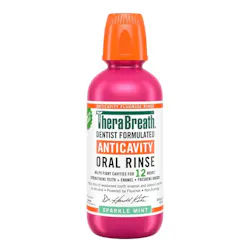
TheraBreath Anticavity Rinse
TheraBreath Anticavity Oral Rinse
It is easy to dismiss over-the-counter (OTC) products. I think most of us do it without even realizing it. We assume they are watered down, weak, or just not as effective as the prescription-
strength things we keep stocked in the practice. And to be fair, a lot of OTC stuff earns that reputation. But every now and then there is a product sitting right there on a drugstore shelf that genuinely helps patients. TheraBreath Anticavity Oral Rinse is one of them.
We see plenty of high-caries-risk patients in our practice. Some have dry mouth. Some sip soda all day. Some struggle with oral hygiene or have dietary habits that work against them. We try to set them up for success with fluoride, hygiene coaching, varnishes, trays, and customized home routines. When we added TheraBreath Anticavity Oral Rinse into that mix, the feedback from patients was surprisingly strong. People like using it. They feel fresher, cleaner, and stay more consistent because the taste is good and the experience is easy.
The real star in the formulation is the sodium fluoride combined with xylitol. The fluoride helps remineralize and strengthen enamel, while the xylitol helps reduce cavity-causing bacteria. That gives you a rinse that does more than just freshen breath. It actively supports a healthier oral environment, especially for patients who need all the help they can get. The pH is balanced, it does not burn or sting, and it is alcohol free, which makes it perfect for dry-mouth patients.
What I appreciate most is its practicality. It fits the lives of real people. Patients do not complain that it tastes bad. They do not skip it because it dries their mouth out. They do not feel like they are using a harsh medicinal rinse. They just use it. And when a high-caries-risk patient actually sticks to a product every day, the results follow.
We have seen fewer white-spot lesions, fewer recurrent caries issues, and better recall outcomes with the patients who are consistently using this rinse. It is not magic. It is just a well-formulated, easy-to-use product that supports everything else we do in the practice. And because it is over-the-counter, patients can pick it up anywhere, or we can stock it in the office for convenience.
Sometimes it’s nice to be reminded that not everything needs to come from a dental manufacturer catalog to work well. TheraBreath Anticavity Oral Rinse is one of those rare OTC products that actually pulls its weight. It helps the patients who struggle most, and it does it in a way that fits their actual habits instead of fighting against them.
A clean single up the middle for TheraBreath.
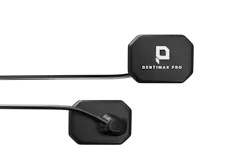
DentiMax Pro Sensor
There are a lot of expensive things we buy in dentistry: intraoral scanners, 3D printers, handpieces, chairs, and delivery systems. Despite all the expensive stuff we need to buy, very few hit quite as hard as a new x-ray sensor. Every dentist knows that sinking feeling when a rep quotes the price of a new one. You suddenly become aware of how small and fragile they are, and how much one wrong bend or accidental drop could cost you. Replacing a sensor feels like replacing a transmission on your car. It is necessary, but it hurts every time.
That’s why I pay close attention anytime I hear about a sensor that offers high-quality imaging without giving me a financial heart attack. The DentiMax Pro Sensor fits that lane perfectly. It is designed to give you the crisp, diagnostic-quality radiographs you expect from a premium sensor, but at a price that feels noticeably more reasonable. That alone gets my attention. When something is both good and affordable in dentistry, you take a second look.
The image quality on the DentiMax Pro is excellent. You get high resolution, clear contrast, and the kind of sharpness that lets you diagnose without guessing. Enamel, dentin, caries, bone levels … everything shows up with the clarity you want. For a sensor that costs significantly less than some of the big names, it punches well above its weight. Patients don’t care what brand sensor you use, but they do care that you can diagnose accurately and confidently. This sensor checks that box easily. We use this sensor out of one hygiene operatory, and I can see the difference in image clarity and crispness with the DentiMax Pro. It integrates directly into our imaging software, which made an easy install and startup.
The comfort factor is another win. The edges are rounded and the profile is slim, so patients are not fighting gag reflexes or wincing while you try to capture a bitewing. A comfortable patient gives better images, and better images make everyone’s life easier. My assistants appreciated the smaller footprint right away because positioning feels more natural and less like dental origami.
The part I love most is that DentiMax lets you try the sensor before you commit to buying it. That is rare in dentistry. Usually, you are dropping several thousand dollars and just hoping you picked the right one. Being able to test the sensor in your own office, with your own software, and your own workflow gives you real confidence. You get to see the images yourself, try the sensor on patients, and confirm that it fits your practice before you spend the money. That is a level of transparency you don’t see very often in dental tech.
Once you look at the image quality, the comfort, the durability, and the price point, the value becomes obvious. You are getting a premium-style sensor at a far more approachable investment. When you compare that to other companies with eye-watering price tags, the choice becomes clear.
Dental sensors will always be one of the bigger purchases we make, but it is nice seeing a company offer real performance without forcing you to drain the equipment budget. The DentiMax Pro Sensor gives you exactly what you need to diagnose well, take consistent images, and keep the practice moving efficiently.
A triple into the left field corner for the DentiMax Pro Sensor.
Editor's note: This article appeared in the April 2026 print edition of Dental Economics magazine. Dentists in North America are eligible for a complimentary print subscription. Sign up here.
 image of a 3D printer
About the Author
 Joshua Austin, DDS, MAGD
Joshua Austin, DDS, MAGD
Joshua Austin, DDS, MAGD, is a graduate and former faculty member of the University of Texas Health Science Center at San Antonio School of Dentistry. Author of Dental Economics’ Pearls for Your Practice column, Dr. Austin lectures nationally on products, dental technology, online reputation management, and social media. He maintains a full-time restorative dentistry private practice in San Antonio, Texas. You may contact Dr. Austin at [email protected].
Updated June 21, 2023