Early integration of robotic-assisted implant surgery to accelerate associate productivity and practice growth
Key Highlights
- Robotic guidance shortens the learning curve for new associates, enabling immediate contribution to implant procedures.
- Yomi's intraoperative flexibility allows for same-day planning and surgery, increasing case volume and efficiency.
- Practices using Yomi experience significant growth in implant volume and full-arch procedures, often exceeding 50% increases.
- The technology enhances accuracy, reduces complications, and serves as a marketing differentiator to attract more patients.
- Adopting robotic systems like Yomi can strategically transform a practice’s growth trajectory and competitive positioning.
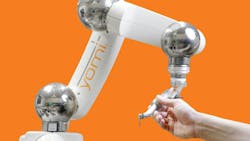
Bringing on a new associate in a surgical dental practice is traditionally viewed as a strategic long-term investment. While beneficial over time, early integration of new clinicians typically involves a lag in productivity and revenue as the associate builds a referral base, earns clinical autonomy, and masters procedural workflows. Emerging technologies—most notably robotic-assisted implant surgery—are reshaping that trajectory.
This report presents four case studies illustrating how the Yomi® robotic system supported accelerated implant-placement volume for associates and overall practice growth under two scenarios: 1) addition of an associate to a practice already using Yomi; and 2) addition of Yomi to a practice with an existing associate. Across all cases, the combination of robotic guidance and optimized team allocation resulted in immediate and substantial increases in implant volume and full-arch procedures
Introduction
Recruiting and integrating associate dentists into implant-focused practices has traditionally required a gradual ramp-up period before new clinicians contribute meaningfully to procedural volume. Factors such as developing a referral base, mastering surgical workflows, and earning patient and staff confidence can limit early productivity. Consequently, practices often accept a temporary reduction in per-provider revenue while anticipating long-term gains once the associate reaches full capacity. Robotic-assisted implant surgery represents a potential inflection point in this paradigm. By reducing the technical and logistical barriers to high-quality implant placement, robotic systems can shorten learning curves, support immediate procedural independence, and enable more efficient allocation of cases between experienced surgeons and associates. This case-series report describes four real-world examples of how the Yomi® system facilitated early productivity gains for associates and accelerated practice-wide implant growth.
The evolution of technology in implant dentistry
Implant placement techniques have undergone significant transformation in recent decades. Freehand placement was once the standard, relying heavily on clinician experience and intraoperative judgment. While effective in the hands of skilled practitioners, freehand methods carried inherent risks, including deviation from ideal angulation and proximity to vital structures.1 Static guides emerged as a solution, offering preplanned accuracy through 3D-printed or acrylic templates. However, these guides required multiple preoperative steps, including scanning, design, and laboratory fabrication, and provided no capacity for intraoperative adjustments.2 Although accuracy improved, the rigidity of static guidance limited responsiveness to intraoperative findings. Dynamic navigation introduced real-time visualization of instrument trajectory relative to planned anatomy.3 This technique represented an advance in flexibility but demanded significant hand–eye coordination and offered no tactile constraint of the surgical handpiece.
Robotic assistance now represents the latest step in this continuum. Robotic systems combine the accuracy of computer guidance with physical haptic feedback, constraining surgical movements to planned trajectories while still permitting intraoperative adaptation.2 By bridging planning and execution, robotic assistance may overcome limitations inherent in freehand, static, and navigation approaches. Clinical research has confirmed improvements in accuracy and angular precision with robotic guidance, as well as reductions in complications and deviations from planned implant trajectories.
The Yomi Robotic System
The Yomi system (Neocis, Miami, Florida) is the first and currently only FDA-cleared robotic platform for dental implant surgery. Yomi integrates three core technologies: haptic guidance that physically constrains the drill to planned paths, real-time tracking of the surgical handpiece relative to patient anatomy, and multimodal intraoperative feedback. This integration enables sub-millimeter accuracy in osteotomy preparation and implant placement.
Unlike static guides, Yomi does not require prefabricated templates and allows clinicians to make intraoperative adjustments. This flexibility supports same-day workflows and permits adaptation to bone density, soft-tissue conditions, or anatomical findings discovered at surgery. Clinical studies have demonstrated that robotic-assisted placement with Yomi improves angular accuracy, minimizes deviation, and reduces risk of encroachment on vital structures.2,4 These features provide distinct advantages for both experienced surgeons and newly trained associates entering private practice.
Case 1
Robert Bryan, DDS, FACD, FACS and Hayden Fuller, DDS, MS (Oral Surgery Specialists of Oklahoma)
Dr. Hayden Fuller, a periodontist, joined Dr. Robert Bryan at Oral Surgery Specialists of Oklahoma in August 2020 immediately following completion of her residency. During her training she had placed implants using conventional methods—primarily freehand and static guides—with no exposure to robotic workflows. Her introduction to Yomi coincided with her entry into private practice. A three-month adaptation period allowed her to develop proficiency in the robotic workflow, during which she placed fourteen implants using the system. Following this initial phase, she transitioned to Yomi as her primary modality for implant placement.
Practice metrics illustrate the impact of her integration. In the six months preceding Dr. Fuller’s arrival, the practice placed 164 implants; in the six months following, implant volume rose to 247—representing a 51% increase. Full-arch rehabilitations also doubled, from four arches in 2020 to eight in 2021. This growth reflected two key operational benefits: first, Dr. Fuller’s use of Yomi enabled rapid throughput of single-tooth implants, increasing daily procedural capacity; second, the efficiency gained allowed senior surgeons to reallocate time to more complex full-arch cases, expanding overall practice capability.
When asked about the technology, Dr. Fuller emphasized that Yomi addressed the uncertainty inherent in freehand placement. In residency, repeated periapical radiographs were necessary to verify angulation and depth; with Yomi, she gained confidence in accurate positioning without repeated imaging. The robot also streamlined scheduling by eliminating the need for prefabricated guides, permitting same-day planning and surgery. For the practice, this translated into faster, less invasive procedures and a broader candidate pool. Economically, implant collections increased consistently year over year, driven by higher surgical volume and improved efficiency.
Case 2
Reinol Gonzalez, DMD, FICOI and Juan Fajardo, DMD (Regency Square Dental, Davie, Florida)
Dr. Juan Fajardo joined Dr. Gonzalez at Regency Square Dental in April 2024 after four years of practicing implant dentistry using freehand techniques. The practice had acquired Yomi in 2020 and already maintained one of the highest implant volumes in its region. Although Dr. Fajardo had no previous robotic experience, his integration into the Yomi workflow was rapid.
In the six months preceding his arrival, Regency Square Dental placed 367 implants, averaging more than 60 per month. In the six months after Dr. Fajardo joined, implant volume climbed to 419—a 14% increase despite the already high baseline. This demonstrated that even a mature, high-volume practice can achieve immediate growth by adding an associate who adopts robotic guidance.
Dr. Fajardo reported that Yomi enhanced accuracy and precision, reduced intraoperative stress, and obviated the need for freehand placement, all of which contributed to greater implant success. For the practice, the system served as a powerful marketing differentiator: patients were intrigued and reassured by the idea of robot-assisted procedures, boosting interest and trust. This patient perception, combined with improved efficiency, contributed to the sustained increase in volume.
Case 3
Michael Costa, DDS, MHA and Jacob Wolkow, DMD (Knoxville Smiles/Malone & Costa Dentistry)
Dr. Jacob Wolkow joined Dr. Michael Costa at Malone and Costa Dentistry at Knoxville Smiles in November 2023 as an associate after two years of practice placing implants with freehand and pre-printed guides. The practice had acquired Yomi in June 2022, resulting in a marked increase in implant volume from 197 placements the year before acquisition to 332 in the first year post-acquisition—a 69% rise. After Dr. Wolkow’s arrival, implant volume grew further to 447 in the following year, an additional 35% increase.
Dr. Wolkow cited same-day surgery and a short learning curve as key advantages of Yomi, allowing him to contribute immediately to the practice’s implant capacity. He quickly assumed responsibility for single-implant cases, which freed the senior dentist, Dr. Michael Costa, to focus on complex full-arch procedures. This synergistic division of labor, combined with coordinated treatment planning and internal referrals, enabled the practice to market comprehensive implant solutions more effectively.
From the practice’s perspective, the robot not only accelerated the associate’s productivity but also created new revenue streams by increasing the number of same-day and emergency treatments and expanding full-arch case volume. The decreased time from diagnosis to surgery and the speed of the robotic workflow compared with freehand or static-guide placement were cited as major drivers of growth.
Case 4
Leo Haydt, DDS and Kristy Bryant, DMD (Tryon Family Dentistry)
Dr. Kristy Bryant joined Dr. Leo Haydt at Tryon Dental in July 2020 as an associate after completing an Advanced Education in General Dentistry (AEGD) residency. For two years she placed implants freehand in a practice focused on developing its implant service line. In July 2022, Tryon Dental acquired the Yomi system. In the six months prior to acquisition, the practice placed 98 implants. Following a brief three-month build-up period, implant volume surged to 207 in the next six months—a 111% increase.
Dr. Bryant reported that Yomi provided confidence with millimeter-level accuracy, facilitated same-day placement of single implants, and markedly shortened her learning curve. For the practice, the robot differentiated the clinic in a crowded implant market and supported Dr. Leo Haydt’s goal of establishing an implant-focused reputation. Patients perceived robot-assisted surgery as high-tech and precise, which enhanced marketing and case acceptance.
Economically, the system condensed treatment timelines into fewer visits, reducing opportunities for patient attrition (“leakage”) and increasing profitability per case. This case illustrates the second scenario in which the introduction of robotics catalyzed growth for an existing associate and transformed the practice’s competitive positioning.
Discussion
These four cases illustrate two complementary pathways for accelerated implant growth. In Case 1, a new associate entered a practice already using Yomi. Robotic guidance shortened the associate’s learning curve, enabled same-day guided surgery without extensive preoperative planning, and allowed immediate procedural independence. This freed senior clinicians to allocate more time to complex full-arch cases, amplifying practice-wide capacity.
In Case 2, Yomi was added to a practice with an existing associate. Here the technology itself catalyzed growth by transforming the associate’s productivity and positioning the practice as a robotic center of excellence. In both scenarios, the combination of haptic guidance, intraoperative planning flexibility, and marketing differentiation contributed to increased case acceptance, higher implant volumes, and more efficient scheduling.
From a financial standpoint, adoption of Yomi resulted in accelerated revenue contribution from the associate, consistent year-over-year growth in implant-related collections, and increased patient volume and surgical conversion rates. The reduced planning burden and intraoperative efficiency allowed associates to see more patients and perform more procedures in a compressed timeframe—critical for early-stage clinicians establishing independence.
Conclusion
Robotic-assisted implant surgery with the Yomi® system can meaningfully shorten the productivity ramp-up for new associates and expand total practice capacity. Whether by adding an associate to an existing robotic practice or adding a robot to a practice with an associate, these case studies demonstrate substantial gains in implant volume, full-arch procedures, and revenue. Beyond clinical accuracy and safety, the technology functions as a strategic practice-growth tool—empowering associates, freeing senior clinicians for complex cases, and differentiating practices in a competitive implant market. These outcomes suggest that robotic systems like Yomi should be considered not only for their clinical precision but also as strategic investments in practice growth. As adoption expands, the synergy between emerging associates and robotic platforms may redefine expectations for productivity in surgical dentistry.
Authors' note: Drs. Haydt, Costa, Gonzalez and Fuller are paid consultants to Neocis
References
- Werny JG, Frank K, Fan S, et al. Freehand vs. computer-aided implant surgery: a systematic review and meta-analysis-part 1: accuracy of planned and placed implant position. Int J Implant Dent. 2025;11(1):35. doi:10.1186/s40729-025-00622-w
- Neugarten JM. Accuracy and Precision of Haptic Robotic-Guided Implant Surgery in a Large Consecutive Series. Int J Oral Maxillofac Implants. 2024;39(1):99-106. doi:10.11607/jomi.10468
- Xu Z, Zhou L, Han B, et al. Accuracy of dental implant placement using different dynamic navigation and robotic systems: an in vitro study. NPJ Digit Med. 2024;7(1):182. doi:10.1038/s41746-024-01178-6
- Banerjee S, Debnath A, Paul P, Banerjee TN. Comparison of accuracy in freehand versus computer-assisted (dynamic and static) dental implant placement: A systematic review and meta-analysis. J Indian Prosthodont Soc. 2025;25(1):22-29. doi:10.4103/jips.jips_369_24
About the Author
 Leo Haydt, DDS
Leo Haydt, DDS
Dr. Haydt is a general and aesthetic dentist based in Raleigh, North Carolina, where he practices at Tryon Family Dentistry. He holds a BS in biological sciences from North Carolina State University and earned his doctor of dental medicine degree from Boston University Goldman School of Dental Medicine. During his dental training, Dr. Haydt completed clinical rotations in implantology, CAD/CAM-restorations and oral surgery, and was awarded the Student Award of Merit by the American Academy of Esthetic Dentistry for his cosmetic work.
Robert B. Bryan, DDS, FACD, FACS
Dr. Bryan is a board-certified oral and maxillofacial surgeon and a founding clinician at Oral Surgery Specialists of Oklahoma, where he has practiced since 2006. He earned his DDS from The Ohio State University and completed advanced surgical residency training in oral and maxillofacial surgery. Dr. Bryan is board-certified by ABOMS and is a Fellow of the American College of Surgeons. He was among the first in Oklahoma to place a dental implant using robotic assistance.
Reinol Gonzalez, DMD, FICOI
Dr. Gonzalez earned his biomedical engineering degree from Tulane University and his DMD from the University of Florida. He has been placing dental implants since 1988 and has maintained a private practice for over three decades. Dr. Gonzalez serves as courtesy faculty at the University of Florida and is a clinical instructor at Implant Educators Academy, where he shares his extensive clinical experience and practical approach to implant dentistry.
Michael Costa, DDS, MHA
Dr. Costa graduated from the University of North Carolina at Chapel Hill School of Dentistry in 2014. He practices in Knoxville, Tennessee, in private practice with his business partner, Dr. Stephen Malone. Dr. Costa serves as a faculty assistant at the Pankey Institute in Key Biscayne, Florida, and has been utilizing the Yomi robotic system for implant and full-arch solutions since 2021. He lives in Knoxville with his wife, Dr. Breanna Costa, and their two children, Bennett and Bella.