Beyond braces: The expanding role of orthdontics in modern general dental practice
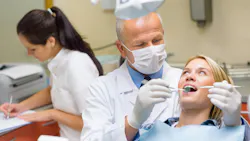
Orthodontics has been undergoing significant transformations recently. Historically, orthodontics was considered a specialty limited to orthodontic offices. However, advances in digital dentistry,1 introduction of aligner therapy, and AI in treatment planning (e.g., OrthoCopilot, Monodontics, Orthomind, etc.) have created an ocean of opportunities for general dentists to incorporate orthodontic care into comprehensive dental treatment.2
Most patients have a common requirement when it comes to having an attractive smile: easy, esthetic, minimally invasive, digitally driven, and affordable.3 Modern general dental practice can provide most of these by combining their knowledge of occlusion and digital dentistry.
Orthodontics as part of comprehensive care
General dentists are the first to diagnose malocclusions, tooth size, and arch length space discrepancies causing spacing or crowding and skeletal malocclusions.
Orthodontic intervention in general practice commonly supports:
1. Prerestorative treatment planning: Create space for restoration, alignment of tilted teeth, improve the margins of restorations for access.4
2. Smile design and esthetic dentistry: Improving the smile arch, correction of minor discrepancies. Instead of placing multiple veneers to cover the spacing or hide the crowding, orthodontic alignment can be considered.
3. Occlusal stabilization: Orthodontic treatment can help with tooth wear in bruxism,
traumatic bite, deep bite.
4. Preprosthetic alignment: Create space for the implant, improve occlusion.
The impact of digital orthodontics
The advancement of digital dentistry is one of the primary drivers behind the integration of orthodontics into general practice.5
1. Technological advancements like intraoral scanning, digital treatment simulation, and 3-D printing have significantly improved diagnostic accuracy and more predictable treatment.
2. Digital orthodontics provides effective patient communication, even before the treatment starts.
3. Digital orthodontics allows clinicians to visualize the tooth movement and educate the patient.
4. The innovations have lowered the barriers for dentists interested in providing orthodontic care, while maintaining high standards in treatment planning.
Clear aligner therapy and accessibility
Improved treatment-planning software and digital monitoring have made clear aligner therapy popular among general dentists.6 The following are advantages of aligner therapy for the general dentist:
1. Improved acceptance due to esthetics and comfort
2. Simplified clinical workflow
3. Digital treatment planning
4. Reduced chairside time
5. Comfortable for the patients
6. Easy maintenance of oral hygiene
As aligner technologies evolve, their role in everyday dental practice is likely to expand further.
The importance of case selection
Despite these advancements, case selection is the most important part of the treatment. Diagnosing the severity of malocclusion is crucial.7 The general dentist usually can handle mild crowding, spacing, relapsed treatment, or prerestorative orthodontics. However, complex skeletal discrepancies or advanced orthodontic problems are best managed by orthodontic specialists.8
A collaborative relationship between a GP and an orthodontist ultimately benefits the patient, which is the ultimate goal.
Looking ahead: The future of orthodontics in general dentistry
The recent advancements in technology—digital imaging, remote treatment planning, and artificial intelligence—are reshaping orthodontics. These advancements are likely to increase the role of the general dentist in orthodontics.
With proper training, the role of general dentists in orthodontic diagnosis and limited treatment will likely expand. Dentists who adopt digital workflows will be well positioned to deliver comprehensive care while improving both efficiency and patient satisfaction.
However, orthodontics performed by general dentists should not be viewed as a replacement for specialty care, but rather as an important component of interdisciplinary dentistry—one that allows general dentists to enhance treatment outcomes and support long-term oral health.
Biography
Komal Khandelwal, DMD, MDS, BDS, is an internationally trained orthodontist with experiences in India and US. She focuses on early detection and intervention in craniofacial growth in pediatric patients. She believes in clinical excellence for improved patient outcomes and advancing the business of dentistry globally.
References
1. Christopoulou I, Kaklamanos EG, Makrygiannakis MA, Bitsanis I, Perlea P, Tsolakis AI. Intraoral scanners in orthodontics: a critical review. Int J Environ Res Public Health. 2022;19(3):1407.
2. Fawaz P, El Sayegh P, Vande Vannet B. Artificial intelligence in revolutionizing orthodontic practice. World J Methodol. 2025;15(3):100598.
3. Hawary A. A multidisciplinary conservative approach for esthetic correction of an irregular smile using Invisalign and restorative techniques. Am J Esthetic Dent. 2013;3(4):264–274.
4. Kermanshah H, Motevasselian F, Amiri Z, Baghbani F. Conservative management of uneven anterior teeth spacing using lingual porcelain laminate veneers: report of two cases with 2- and 6-year follow-up. Front Dent. 2024;21:23.
5. YC Chiang. Effective patient-dentist communication with a simulation system for orthodontics. Healthcare (Basel). 2023;11(10):1433.
6. Turner ER. Digital workflow in orthodontics: enhancing accuracy and treatment outcomes. Int J Orthop Orthod Res. 2025;1(3):11–13.
7. Jayaprakash PK, Modi P, Sapawat P, Thakur RP, Choudhari T, Chandrakar J. A survey on orthodontic services provided by general dental practitioners. J Family Med Prim Care. 2019;8(7):2246–2251.
8. Tamer İ, Öztaş E, Marşan G. Orthodontic treatment with clear aligners and the scientific reality behind their marketing: a literature review. Turk J Orthod. 2019;32(4):241–246.
About the Author
Komal Khandelwal, BDS, MDS, DMD,
BDS, MDS, DMD
Komal Khandelwal, BDS, MDS, DMD, is an internationally trained dentist with experiences in India and the US. She focuses on early detection and intervention in craniofacial growth in pediatric patients. She believes in clinical excellence for improved patient outcomes and advancing the business of dentistry globally.