How artificial intelligence is transforming clinical decision-making
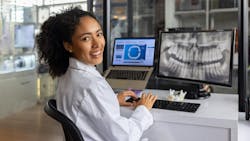
Dentistry is entering a new stage of precision and integration. Artificial intelligence is not replacing the clinician's expertise; it is deepening it. AI enhances how dentists interpret data, communicate with physicians, and deliver preventive, interdisciplinary care that benefits the whole patient.
AI as a clinical compass
For decades, dental decisions have relied on experience, training, and judgment. Today's clinician, however, faces an overwhelming flow of diagnostic information: radiographs, CBCT scans, intraoral imaging, salivary microbiome data, and sleep studies. Artificial intelligence allows us to interpret this information in context and in real time.
"AI gives dentists a second layer of clinical insight," says Dr. Kathryn Alderman, founder of Intelligent Care Alliance and author of The AI Advantage in Dentistry. "It analyzes thousands of comparable datasets and helps identify risk factors long before symptoms appear. This leads to earlier intervention and more predictable outcomes."1-3
Dr. Maria Sokolina, diplomate of the American Academy of Dental Sleep Medicine, emphasizes how this technology unites clinical reasoning with biological insight. "In my practice, I use AI to connect medical history, medication profiles, periodontal findings, and salivary microbiome results. The system helps design a personalized plan that reduces pathogenic bacteria and restores balance through probiotics, nutrition, and targeted medical collaboration."
Both experts agree that AI serves as a compass for clinical reasoning, not a replacement for it. By guiding interpretation rather than dictating it, AI preserves the art of dentistry while expanding its scientific precision.
Sleep apnea: A model for interdisciplinary care
Sleep-disordered breathing is one of the clearest examples of how AI bridges dentistry and medicine. Dentists often detect the first signs of airway dysfunction, but optimal outcomes require coordinated care.
"AI can merge CBCT images, intraoral scans, and sleep-study data into a single clinical analysis," notes Dr. Alderman. "This allows both dental and medical teams to see the same information and make better-aligned decisions."4-6
Dr. Sokolina adds, "Medical doctors appreciate receiving structured updates on their patients' progress when treated for sleep apnea in a dental practice. It shows accountability and fosters long-term professional trust. Many physicians are fascinated by the connection between the oral microbiome, cardiovascular health, and cognitive function. The microbiome has become an ideal bridge between medicine and dentistry."7,8
Through these shared reports, AI transforms fragmented data into meaningful conversation between specialties.
Seeing the whole patient
Artificial intelligence expands the clinician's ability to recognize how oral conditions reflect systemic imbalance.
"AI allows us to detect the earliest signs of inflammation, acid reflux, or airway dysfunction that might otherwise be missed," says Dr. Alderman. "When algorithms compare periodontal or radiographic patterns with population data, we can intervene before irreversible damage occurs."1,3
"I frequently observe specific enamel and gingival patterns that signal reflux or airway obstruction," adds Dr. Sokolina. "With AI, I can create comprehensive reports for primary-care physicians and cardiologists. It ensures that what begins in the mouth becomes part of the patient's total health picture."
This integrative approach is redefining dentistry's role from restorative to preventive and predictive.
Raising the standard of care
The true promise of artificial intelligence is not speed but quality. Patients benefit from early identification of disease, while dentists gain confidence through evidence-based validation.
"AI allows us to practice predictive dentistry," says Dr. Alderman. "It can simulate outcomes, quantify risk, and track progress objectively. These tools strengthen clinical judgment and support informed consent."2
"Not every sleep apnea case can be resolved with an oral appliance alone," explains Dr. Sokolina. "Using AI, I compare pre- and posttreatment sleep-study results and share concise progress reports with collaborating physicians. It ensures the patient's airway, dental health, and systemic condition are managed as one continuum."4,6
Such collaboration elevates dentistry's role within the broader health-care system and redefines its contribution to population health.
A future of collaborative intelligence
Artificial intelligence is not the end of human clinical reasoning but the beginning of collaborative intelligence.
"Dentistry's future lies in integration," says Dr. Alderman. "AI helps us document, communicate, and connect. It transforms isolated data points into a unified story about the patient."
"When we connect dentistry with medicine through intelligent systems," concludes Dr. Sokolina, "care becomes more preventive, personal, and human."
By incorporating AI into the dental practice, we elevate clinical care, strengthen medical collaboration, and create a more efficient, sustainable, and profitable model for the future of dentistry.
Editor's note: This article appeared in the February 2026 print edition of Dental Economics magazine. Dentists in North America are eligible for a complimentary print subscription. Sign up here.
References
-
Ahmed N, Abbasi MS, Zuberi F, et al. Analysis, application, and outcome in dentistry-a systematic review. J Dent. 2021; 117:103900. doi:10.1155/2021/9751564
-
Mallineni SK, Sethi M, Punugoti D, et al. Artificial intelligence in dentistry: a descriptive review. Appl Sci. 2022;12(22):11429. doi:10.3390/bioengineering11121267
-
Rokaya D, Jaghsi AA, Jagtap R, et al. Artificial intelligence in dentistry and dental biomaterials. Front Dent Med. 2024;5:143. doi:10.3389/fdmed.2024.1525505
-
Cioboata R, Balteanu MA, Mitroi DM, et al. A narrative review of sleep apnea and oral health. Front Med. 2025;12:1468211. doi:10.3390/jcm14155603
-
Sharma S, Essick G, Schwartz D, et al. Sleep medicine care under one roof: integrating oral appliance therapy for sleep-related breathing disorders. J Clin Sleep Med. 2013;9(7):699-703. doi:10.5664/jcsm.2934
-
Moreau JA Jr. Perspective on artificial intelligence in dental sleep medicine. J Dent Sleep Med. 2025;12(10):SA1.
-
Li Y, Zhu M, Liu Y, et al. The oral microbiota and cardiometabolic health: a comprehensive review and emerging insights. Nat Rev Cardiol. 2022;19(10):712-730. doi:10.3389/fimmu.2022.1010368
-
Willis JR, Gabaldón T. The human oral microbiome in health and disease. Genome Med. 2020;12:42. doi:10.3390/microorganisms8020308
About the Author
 Kathryn Alderman, DDS
Kathryn Alderman, DDS
Kathryn Alderman, DDS, is the founder and CEO of multiplication group practice and Progressive Practice Solutions, the agency supporting dental practices. Her mission is to create a successful dental business fast and without burnout. Her operating system for success is simple and consists of three Ps: people, processes, and products. Using her operating system, she has many successful stories of creating profitable dental businesses without burnout for dentists or teams.
Connect with her at https://progressivedentalmentor.com/, linkedin.com/in/progressivepracticesolutions/, or youtube.com/@progressivedentalmentor.
 Maria Sokolina, DDS
Maria Sokolina, DDS
Maria Sokolina, DDS, founder of Harmony Dental Arts and diplomate of the AADSM, specializes in dental sleep medicine, using dental appliances, orthodontics, and myofunctional therapy to treat sleep apnea. She educates via Facebook and her YouTube channel “Sleep apnea; breathing, snoring help.” To learn more, visit drmariasokolina.com. You can also take a self-assessment on myofunctional therapy and sleep quality, which will help you determine your level of facial and sleep fitness and provide personalized exercises to improve your well-being.