Shifting nondental emergency visits away from the ER via teledentistry
Key Highlights
- Rising dental ER visits highlight a preventive care gap: Millions of Americans seek emergency care for preventable dental issues, costing billions annually and often resulting in incomplete treatment.
- Teledentistry offers an efficient, cost-saving solution: By using real-time and asynchronous virtual care models, hospitals can divert up to 79% of nonurgent and semi-urgent dental ER visits, improving outcomes and reducing system strain.
- Community partnerships amplify impact: Collaboration among dentists, hospitals, and local organizations can expand access, cut Medicaid costs, and reduce unnecessary prescriptions while promoting education and volunteerism.
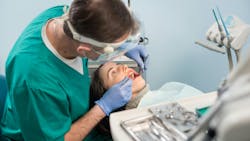
Oral health emergency department (ED) visits are increasing nationally. This increase in ED admissions is an indicator that preventive dental and oral health-care practices are not being utilized.1 Emergency room (ER) visits for dental conditions in the United States have been increasing significantly, reaching 2.1 million visits by 2012; ER visits for dental health care cost three times as much as a visit to the dentist, averaging $749 if the patient isn’t hospitalized, amounting to $1.6 billion annually (one-third of which is paid by Medicaid).
Many of these visits are for preventable dental problems, and ERs typically lack dental specialists, resulting in treatment that addresses symptoms rather than underlying issues, often leading to repeat visits.2 This article highlights how the use of teledentistry can help to positively impact this trend without physical ER presence of dental personnel.
Background and significance
The COVID-19 pandemic accelerated the use of telehealth services, including teledentistry, which was legally integrated into California’s Dental Practice Act as early as 2014 and further expanded in 2020.3 Several states have followed this trend to allow for better access to dental health professionals.
Teledentistry allows patients to receive dental care remotely through telecommunications technology, enabling dentists to provide consultations and evaluations without the need for physical presence in a dental office. ER visits for dental pain are costly and inefficient, with many patients receiving only painkillers or antibiotics, which do not resolve the underlying dental issues. Approximately 39% of these patients return to the ER.
Comparatively, dental visits cost significantly less, ranging from $90 to $200. The current billing system often uses the ICD-9-CM code 525.9 for unspecified dental disorders, which could be better managed with dental professional oversight to reduce repeat ER visits.4,5
Telehealth and teledentistry defined
Telehealth broadly encompasses virtual medical and educational services, with teledentistry specifically referring to the use of telehealth systems in dental care. Teledentistry modalities include:
- Live video (synchronous): Real-time two-way audiovisual interaction between patient and provider
- Store-and-forward (asynchronous): Transmission of recorded health information for later evaluation
- Remote patient monitoring (RPM): Collection and transmission of personal health data
- Mobile health (mHealth): Health services supported by mobile devices
The American Dental Association introduced two teledentistry CDT codes in 2018: D9995 for synchronous and D9996 for asynchronous encounters. Dentists document and report these codes alongside other procedures delivered during teledentistry events, complying with state laws and licensure requirements.6
Dental ER triage assessment scale
A triage system categorizes dental ER visits into four levels based on urgency and wait times:
Level Wait Time % of ER Dental Visits Diversion Potential
1 – Immediate 10-15 minutes 4.6% Not likely to divert
2 – Urgent 15-75 minutes 16.8% Divert within current workforce
3 — Semi-urgent 1-3 hours 54.8% Potential to divert with external workforce
4 — Nonurgent 2-24 hours 23.9% Likely to divert to external workforce
Levels 3 and 4 constitute approximately 79% of dental ER visits and occur mostly outside normal dental office hours, which average 35 hours per week with limited weekend availability.4 This scale supports diverting nonurgent and semi-urgent cases to teledentistry platforms, thereby reducing ER burden.
Proposed telehealth service delivery models
Two primary models for teledentistry in ER settings are proposed:
Scenario A—Real-time teledentistry (synchronous): A dental provider uses portable equipment to conduct live assessments with patients in the ER via a secure connection. This enables immediate diagnosis, evaluation, and scheduling of follow-up care at affiliated dental practices. Relevant CDT codes include D0191 (assessment), D0350/D0351 (diagnostic images), and D9995 (synchronous teledentistry).
Scenario B—Store-and-forward teledentistry (asynchronous): ER triage staff or dental auxiliaries collect patient data (radiographs, photos, charts) and securely transmit it to an off-site dentist for later review and treatment planning. CDT codes used include D0190 (screening), D0350/D0351 (diagnostic images), and D9996 (asynchronous teledentistry).
Both methods require appropriate use of Place of Service (POS) code 02 for telehealth services and must comply with HIPAA security and privacy standards.
American Dental Association’s position
According to the ADA’s Health Policy Resources Center analysis of MEPS and US Census data, 181 million people living in the US did not visit the dentist in 2010. Many people without dental coverage don’t seek treatment until their dental pain grows so severe that it sends them to a hospital ER. However, most hospitals can’t provide comprehensive care, so the problem often never becomes resolved.2
Strategic community-based partnership model
This model is based on the ADA’s “Emergency Department Referral Initiative.”2 The proposal advocates forming partnerships among local dentists, community leaders, and low-income residents to provide access to nonurgent and semi-
urgent dental care through volunteer dentists or clinics. Patients demonstrating financial need may receive treatment in exchange for community service, and dental students can gain clinical experience through these programs.
This model aims to:
- Reduce dental ER visits by 72%–79% and repeat visits
- Achieve significant cost savings and reduce Medicaid spending
- Promote community volunteerism and education
- Decrease unnecessary prescriptions of antibiotics and pain medications, with monitoring through prescription programs
Synopsis and cost impact
By integrating teledentistry into ER triage, hospitals can divert approximately 79% of dental ER visits (semi-urgent and nonurgent cases) to remote dental care, leading to substantial cost savings. For example, in a hypothetical scenario where a hospital handles 50,000 dental ER visits annually, diverting 39,500 patients could reduce ER costs by nearly $29.6 million based on 2012 cost data.7 These savings could be reinvested to develop community-based dental clinics or mobile units, enhancing access to care during extended hours and reducing ER staff burden.
In conclusion, this article presents a comprehensive yet novel approach to managing nondental emergency visits via teledentistry, emphasizing improved patient outcomes, cost efficiency, and strategic partnerships to alleviate the strain on ER systems while providing timely dental care.
Editor's note: This article appeared in the November/December 2025 print edition of Dental Economics magazine. Dentists in North America are eligible for a complimentary print subscription. Sign up here.
References
- Zaborowski M, Dawson R. Emergency department admissions for dental & oral health concerns in rural Northwestern Pennsylvania. Open J Emerg Med. 2016;4(1). doi:10.4236/ojem.2016.41004
- Action for dental health. American Dental Association. https://www.ada.org/resources/community-initiatives/action-for-dental-health
- California Dental Practice Act (AB1174), 2014.
- HPI analysis of the 2017 Nationwide Emergency Department Sample. Agency for Healthcare Research and Quality. https://www.ahrq.gov/
- Wall T, Nassen K, Vujicic M. Majority of dental-related emergency department visits lack urgency and can be diverted to dental offices. Health Policy Institute Research Brief. American Dental Association. Accessed March 31, 2020.
- CDT 2018: Dental Procedure Codes. American Dental Association; 2018.
- A costly dental destination. PEW Charitable Trust. February 2012. https://www.pew.org/en/research-and-analysis/-reports/2012/02/28/a-costly-dental-destination
- National Hospital Ambulatory Medical Care Survey (NHAMCS). Centers for Disease Control and Prevention. 2010. https://www.cdc.gov/nchs/nhamcs/about/index.html
About the Author
 Raymond L. Wright III, DDS, MS
Raymond L. Wright III, DDS, MS
Raymond L. Wright III, DDS, MS, a native of Chicago, Illinois, earned his BS in biological sciences and his MS in biological sciences/microbiology from Illinois State University in 1997 and 2000 respectively. He completed his DDS at the University of Illinois-Chicago in 2005. He is a member of the American Dental Association, Academy of General Dentistry, California Dental Association, San Diego County Dental Society, and the American Academy of Dental Sleep Medicine.