Why dentists must embrace oral appliance therapy to combat obstructive sleep apnea
Key Highlights
- Dentists play a critical role in sleep apnea care: By recognizing oral and facial indicators of sleep-disordered breathing during routine exams, dentists can identify at-risk patients early and collaborate in diagnosis and treatment.
- Oral appliance therapy offers an effective alternative to CPAP: Modern mandibular advancement and airway remodeling devices improve comfort, adherence, and long-term outcomes for patients with obstructive sleep apnea.
- Integrating dentistry into whole-body health care is essential: A collaborative, interdisciplinary approach between medical and dental professionals can enhance systemic health, patient education, and overall well-being.
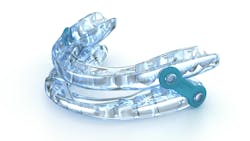
Dentistry has a vital but too-often underrated function in the long-term management, diagnosis, and treatment of sleep-disordered breathing. To treat patients properly, we must escape silos that go back too far and forge a truly collaborative partnership between medicine and dentistry grounded in education, respect, and evidence-based practice. Filling this gap would not only benefit patient outcomes but also the efficiency and reach of sleep medicine itself.
Why sleep apnea care should involve dentists
One of the most common myths for health-care providers is that obstructive sleep apnea (OSA) is strictly a medical, and not a dental, disease. Doctors tend to be unaware of the fact that specially trained dentists in dental sleep medicine offer an invaluable aspect of the diagnosis and treatment of sleep-disordered breathing, especially through oral appliance therapy (OAT). It is fallacious to believe that OSA should be treated only by pulmonologists or ENTs, and it creates an incomplete and less effective system of care.
Other myths include that OAT is ineffective. There’s a broad belief that CPAP is the only treatment for the underlying problem, and OAT merely masks symptoms. Actually, modern oral appliances work by stabilizing and opening the airway, often fixing the structural components of airway blockage—not just its symptoms.
The dentist’s role in early OSA detection
Dentists are specially positioned to identify early warning signs of sleep-disordered breathing during routine visits. As patients visit their dentist more often than their physician, this presents an important opportunity for early identification.
Signs of OSA include:
- Bruxism (grinding/clenching), which is often accompanied by microarousals due to sleep-disordered breathing
- Mouth breathing at night is common among patients with OSA.
- Scalloped tongue, enlarged or elongated uvula, and red/inflamed soft palate, which typically present as snoring
- High Mallampati scores (III or IV) indicate a narrowed airway.
- Disorders of the TMJ, such as restricted opening and tenderness, frequently coexist with sleep-disordered breathing due to parafunctional habits and airway-
related jaw posturing. - Patient-reported symptoms: excessive daytime sleepiness, poor quality of sleep, morning headache, and witnessed breathing pauses
By observing these oral and facial signs, general dentists can become key players in the early detection of sleep apnea. Through the addition of airway assessments and sleep health questionnaires to checkups, dentists can transform routine visits into life-saving appointments.
Limitations of CPAP therapy
CPAP was the initial first-line treatment for OSA, but compliance-based issues and new research questioning long-term superiority have shifted the landscape. Patients using CPAP report:
- Mask discomfort and intolerance
- Dry mouth and nasal congestion
- Sleep disruption
- Psychological and emotional triggers
- Travel and lifestyle inconvenience
Real-world compliance with CPAP is around 50%,1 with “full compliance” defined as ≥4 hours per night use on ≥70% of nights.2 CPAP requires a face or nasal mask, headgear, tubing, and electricity, which in turn may also lead to skin irritation or pressure sores, along with inducing disrupted sleep due to leakage from the mask or due to the sound of the machine.
Oral appliance therapy: A comfortable, effective alternative
OAT provides an efficient, effective, and comfortable option that is well-suited for CPAP-intolerant patients or those seeking less intrusive therapy. As personalized treatment becomes more standard, OAT is becoming better known not only as an alternative but as a first-line treatment in appropriate situations.
Oral appliances have several benefits over CPAP:
- Improved comfort and tolerability
- Quiet and unobtrusive
- Ease of use and portability
- Higher adherence rates (often up to 80%)3
- Fewer side effects
- Greater psychological acceptance
Mandibular advancement devices (MADs), which are one of the common forms of OAT, protrude the jaw to maintain an open airway during sleep. Patients can use the device all night, optimizing its clinical effectiveness and therapy duration.
Beyond traditional OAT: The structural approach to treating OSA
OAT has also become more sophisticated, with the most advanced devices currently available being more customizable, comfortable, and digitally accurate. The Vivos CARE oral medical devices are the only devices that are FDA-cleared for the treatment of mild, moderate, and severe OSA in adults and pediatric patients 16 years and older.4 Unlike traditional appliances that simply treat symptoms, these devices can stimulate airway remodeling and craniofacial growth, and hence, offer structural, long-term solutions.
These appliances are intended for an interdisciplinary setting. They function more as orthopedic or orthodontic appliances, causing permanent alteration instead of lifelong dependency. An interdisciplinary treatment team—led by the dentist and supported by chiropractors, physical therapists, craniosacral therapists, breathing specialists, and myofunctional and reflex integration therapists—offers a holistic, integrated treatment that improves not just sleep quality but also the overall quality of life.
High levels of comfort in patients and high-compliance oral appliances are a first-line treatment, even in advanced stages.
A new era for dentistry: Leading in integrated health care
To address the health-care needs of today, dentistry needs to change from a tooth-centered and reactive model to a whole-body and proactive approach. This transformation can position dentistry at the forefront of integrated health care and enhance outcomes in a variety of systemic conditions.
Dentists must be trained to identify how periodontal disease, bruxism, airway obstruction, and malocclusion are connected to systemic conditions such as cardiovascular disease, diabetes, and sleep apnea. However, fragmented communication among medical and dental providers often results in the failure to exploit opportunities for prevention.
To bridge this gap, dental professionals should implement systems of collaborative care—including shared electronic health records (EHRs), referral protocols, and interprofessional case conference—that can expand knowledge, contribute to their profession, and enhance patient outcomes by collaborating with other health-care professionals to build multidisciplinary care teams and integrating medical screening questions, risk assessment, and systemic health indicators into routine dental exams.
Patient education is also essential. Every visit to the dentist should establish the connections among oral health, airway health, inflammation, and chronic disease. Images, videos, and simple explanations can show patients the relevance of oral health in avoiding chronic disease.
The path forward: Positioning dentistry as a frontline health discipline
Closing the gap between oral and general health means dentistry must become a frontline health profession—a field that cures, diagnoses, prevents, and comanages chronic disease alongside the rest of the medical community. This model will take dental professions to the next level, improve patient outcomes, reduce long-term health-care costs, and help build an integrated future for overall well-being.
Editor's note: This article appeared in the January 2026 print edition of Dental Economics magazine. Dentists in North America are eligible for a complimentary print subscription. Sign up here.
References
- Kim J, Tran K, Seal K, et al. Interventions for the treatment of obstructive sleep apnea in adults: a health technology assessment. Canadian Agency for Drugs and Technologies in Health; March 2017.
- Chaplin H, Ward K. How many hours per night is enough? A systematic integrative review to identify optimal hours of CPAP therapy use for sleep apnoea. Health Sci Rev. 2022;5(4):100061. doi:10.1016/j.hsr.2022.100061
- Skalna M, Novak V, Buzga M, et al. Oral appliance effectiveness and patient satisfaction with obstructive sleep apnea treatment in adults. Med Sci Monit. 2019;25:516-524. doi:10.12659/MSM.911242
- Huntsman RK. FDA awards first-ever 510(k) clearance to treat severe OSA with unique oral medical devices. Dental Economics. December 4, 2023. https://www.dentaleconomics.com/sponsored/article/14302232/fda-awards-first-ever-510k-clearance-to-treat-severe-osa-with-unique-oral-medical-devices
About the Author
 Bahar Esmaili, DDS
Bahar Esmaili, DDS
Bahar Esmaili, DDS, is vice president of clinical integration at Vivos Therapeutics and a leading expert in airway-focused dentistry and TMJ disorders. She serves as a member of the Colorado State Board of Dental Examiners. With advanced training in craniofacial pain and airway development, Dr. Esmaili treats highly complex breathing and airway cases in Denver and Dubai, where she also oversees Vivos Therapeutics’ clinical training across the Middle East. She is a North American consultant for 3M’s Council of Innovative Dentistry and a member of the AACP’s educational committee.