Dentistry at a crossroads: Dr. Chris Salierno on the business and future of the profession
Episode highlights
-
Why organized dentistry still matters: Chris makes the case for professional membership, community, advocacy, and having a collective voice.
-
The dental economy is sending signals: Patient spending is declining, practices are reporting lower patient volume, and economic pressures are affecting treatment acceptance.
-
DSOs aren't necessarily the problem: Chris explains why management, incentives, and leadership matter more than the ownership model when it comes to clinical autonomy.
-
AI is changing how practices operate: From clinical calibration with VideaHealth to business intelligence using Claude, technology is creating new opportunities.
-
There's more than one way to build a dental career: Chris shares his journey through organized dentistry, publishing, teaching, and executive leadership.


Episode description
What happens when two dentists realize they may have first met on a pre-dental message board nearly 30 years ago?
This week on Dentistry Unmasked, Brian and Pam sit down with Dr. Chris Salierno and the conversation starts with an unexpected reunion before moving into a wide-ranging look at where dentistry is headed. Chris shares what he’s learned in his role as Chief Dental Officer at Tend, including how large organizations can create more consistent clinical models and how AI is becoming part of everyday decision-making, from clinical calibration to analyzing practice data. He also talks about his new podcast, Dental Business Insider, where he takes a deeper look at the economics, trends, and business decisions shaping dentistry.
Related articles
 Dental worker utilizing AI
Dentistry Unmasked — Episode 168
Opening and pre-dental missed connections
Brian Nový: Hey, everyone! Welcome back to another episode of Dentistry Unmasked. I'm Dr. Brian Novy, and with me by my side, as ever, is my faithful prosthodontist, Dr. Pamela Maragliano. How are you doing, Dr. Pam?
Pam Maragliano: I'm curious. You had a pause before you said your name. Did you almost forget it?
Brian Nový: Well, I wanted to get right into it. I wanted to go straight to our guest, and I thought, do we even need to do this intro anymore? Because this episode has been building for quite a while. There's a lot of momentum and undercurrent within it. I don't know if you can feel it, Pam, but there's something palpable here today.
Pam Maragliano: Oh, I can feel it, yes.
Brian Nový: Can you? Can you?
Pam Maragliano: Yes, I can.
Brian Nový: Chris! Dr. Chris Salierno, nice to have you with us.
Chris Salierno: Hey, hey!
Chris Salierno: Good to be back!
Pam Maragliano: Oh my gosh, I'm always so happy to see you, whether it's in person or even on Zoom. This is thrilling for me. I met Chris at a KOL event through Procter & Gamble, and I feel like he's heard the story and lived it, so it's not new to him.
I'm a New Yorker. I feel like I don't really like you until I decide that I like you, and that sometimes takes a minute. But there's always that rare person you meet, and right off the bat you're like, "Oh my gosh, they're awesome. I love this person." Chris is one of those people for me. Now, he is not one of those people for Brian.
Brian Nový: No.
Pam Maragliano: I'm not giving anything away! I just said he was one of those people for me, but I don't think he's one of those people for you. So I think you should tell your story, because mine was great, and yours was...
Chris Salierno: I am fascinated. I have no idea what's about to come out of Brian's mouth. We haven't discussed this beforehand. I'm so excited. I can't wait.
Brian Nový: We haven't. Chris, come close. Come close. So, Chris, do you remember back in the 1990s?
Chris Salierno: Seriously? Are we seriously going that far back?
Brian Nový: Yes, Chris. I'm talking 1997, 1998.
Chris Salierno: I was a freshman or sophomore in college.
Brian Nový: And what were you doing online?
Chris Salierno: Online?
Brian Nový: Yeah. What were you spending your time online doing?
Chris Salierno: College?
Brian Nový: Yeah, yeah, Chris. Do you remember what you were doing online back then?
Pam Maragliano: Was it MySpace?
Brian Nový: Nope. No, this was before MySpace. This was pre-MySpace.
Chris Salierno: There was no social network at that point.
Brian Nový: Right?
Chris Salierno: I didn't have much of an online presence at all.
Brian Nový: There was! Correct me if I'm wrong, but was there not a pre-dental message board in the early days of the internet that you hung out on?
Chris Salierno: I don't think so. What would that have been? Just a message board somewhere? I didn't know there was going to be a dental school until, I would say, the year 2000. I was … thinking pre-med. I don't know, it was late '90s, somewhere around there, when I started thinking, "My dad's an orthodontist, and that seems fun. So what am I doing with all this medical stuff?" I started thinking about dentistry. There was a pre-dental board somewhere, but it doesn't ring a bell. Go ahead.
Brian Nový: Weren't you part of that initial group of pre-dental students who were creating or thinking about pre-dental.com as a website?
Chris Salierno: No! This doesn't ring a bell at all, but keep going...
Brian Nový: Then never mind. You're not who I thought you were.
Chris Salierno: This plot is thickening. There can't be that many Chris Saliernos...
Brian Nový: That's what I said! That's what I said. Well, maybe PTSD has blocked it out of your memory, but you and I used to chat on this message board as pre-dental students about getting into dental school. When I met you for the first time at the ADA, I thought, "Holy crap, that's Chris Salierno! Oh my gosh, you and I were talking when we were pre-dental students together." No, that wasn't you?
Chris Salierno: This is blowing my mind right now. I don't recall this, but my memory can be a little funny.
Brian Nový: We need to use AI.
Chris Salierno: Do you remember where it was? This was the early internet days, so...
Brian Nový: Yeah, this was... I had created a Tripod website for pre-dental students. It was pre-dental advice, and you and I would talk on the message board. I just remember thinking, "Wow, that's so cool." You and I were two of the most vocal people on this message board, talking. You had a different business perspective on dentistry at the time, and when you became involved in economics, I thought, "Well, of course, that makes perfect sense."
I had so much experience as a pre-dental student volunteering in community health centers, in the trenches of the barrios of Los Angeles, watching people get their teeth ripped out by dentists who were court-ordered to provide volunteer services in these free clinics. It was just a crazy atmosphere to watch dentistry happening. You and I were sharing these experiences with other pre-dental students on this message board. They didn't have access to clinical experience and were asking, "How do I get my shadowing hours?"
I was saying, "Well, I've got all these clinics in Los Angeles." And I remember you and I talking. Then we lost contact because, you know, all pre-dental students lose contact with everyone in their lives once they get to dental school. Everything shifts, and you wonder what happened to that person. Then, lo and behold, I saw you across the room at the ADA years later. I thought, "Holy crap! Look at us now!"
Chris Salierno: That's that guy.
Brian Nový: Yeah.
Chris Salierno: Wow! Well, I wish...
Brian Nový: Well, it's good to see you again, Chris.
Chris Salierno: Is there, like, the Internet Archive? Are there places we can go to find digital archaeologists to uncover this? Do you remember the name of this board or something? I'm curious to know what your recollection is, because I want to go digging.
Brian Nový: I'm terrified to see that website I created. It's got to be out there somewhere.
Chris Salierno: Oh, you created it?
Brian Nový: I think I called it something like "The First 100% Pre-Dental Website on the Internet."
Chris Salierno: This was the '90s. It was like Manifest Destiny. We're all rushing out west and planting a flag, saying, "Oh yeah, now we own pre-dental.com!"
Brian Nový: Right. I wish I had. Chris, you and I could have started pre-dental.com at the time.
Chris Salierno: Oh my gosh!
Brian Nový: You know, but now we're...
Chris Salierno: You'd be rolling in so much money!
Brian Nový: Hundreds of dollars, I think.
Chris Salierno: Hundreds and hundreds of dollar bills!
Brian Nový: That lucrative world of the pre-dental community.
Chris Salierno: Yeah, yeah.
Brian Nový: All right, so what are you doing now, Chris? What are you doing now?
Chris Salierno: Oh my gosh! Well, it's been a fun journey in dental media. This is great. You were a pioneer of dental media in the late '90s, for sure. You started a website and all that. I didn't get really involved until 2000 ... Well, when I started my blog, The Curious Dentist, in 2010, it was because I loved lecturing. I wanted to lecture more. You lecture, then you leave, and you have no way to keep that relationship going.
A frank discussion about organized dentistry — 09:15
Brian Nový: But back up just a second, Chris. You didn't just launch your blog. You were really, really engaged with the American Student Dental Association and the new dentist community within the ADA.
Chris Salierno: Yes. I had the great honor of being president of the American Student Dental Association during my last year in dental school. That was great fun, and that's where I got the bug for traveling and talking about dentistry and the issues that matter. That got me involved with the ADA's New Dentist Committee. I joined my local committee, got involved at the state level, and eventually served as chair of the New Dentist Committee. Dentistry is really fun, but I love all the things that come with it, especially meeting people from around the country. I'll share something with you.
I think I've talked about this a little before, but I got depressed during my third year of dental school. Actual depression. I wasn't diagnosed, but I was depressed.
Brian Nový: Oh, I was diagnosed.
Chris Salierno: You were diagnosed. Okay. For me, it was a question of whether I was even good at this. Had I made a horrible mistake? I was overwhelmed. I really loved the academic material, but my first interactions with patients were difficult. I had no confidence. I'd say to a patient, "You should come back and get a filling." Meanwhile, I'd only done one of these myself! How could I tell this person that with any confidence? I felt like a fraud. I guess we would call it imposter syndrome now.
I had some great support from my professors, but others weren't so supportive. I kept wondering, "Am I even good at this?"
My salvation was finding the American Student Dental Association and getting outside those four walls of the clinic to talk with other people. "Oh, it sucks for them, too! Oh, this is great news!" We commiserated, but we also talked about the issues we were facing. We'd say things like, "Yeah, this licensure exam is dumb." It was so uplifting to know I wasn't alone. I got addicted to that. I think that was the emotional undercurrent behind why I became so involved in organized dentistry as a student.
That led me to discover that I loved sharing those experiences with other people. I realized there were other people struggling with clinical issues and practice management. I could only give so many lectures, and my phone wasn't ringing very often as a new dentist. The blog gave me an opportunity to share things by saying, "Guys, I've screwed this up, too. Here's my take."
Brian Nový: Damn. I wouldn't ... I want to continue putting him on the spot and grilling him, but do you want to take the conversation in a certain direction?
Pam Maragliano: No, no. Everything is on the table. Drill away!
Brian Nový: So, organized dentistry, Chris. You've seen the inside of organized dentistry, much like I have as a young dentist. We've both seen the inside of councils and committees, traveling to Chicago on the American Dental Association's dime, walking across the street and up the elevator, shaking hands, and thinking, "Holy crap, I'm at the American Dental Association, and they expect me to know what I'm talking about. I'm literally three years out of dental school!"
I know how I feel about supporting organized dentistry moving forward. But given everything you've seen within the organization, I think you said something really important. When young dentists say, "I don't understand why I would join organized dentistry," I tell them it's because they don't realize they're going to feel like they're on an island at some point.
That lifeline to organized dentistry is where you find commonality and camaraderie with people who understand what you're going through. There's a whole different stress level that comes with all this stuff that people who haven't experienced it don't understand.
Within organized dentistry, you can get out of the weeds and see that there's a whole different landscape up here. Can you talk about that for people who say they don't see the value in what happens at that ivory tower?
Chris Salierno: Membership in professional associations has been declining for quite some time, and we can speculate about all the reasons why. Unfortunately, the ADA is no different. I can make a plea for a few different reasons to join. For myself, and I think for you and many other colleagues and friends, organized dentistry is a way to take the incredible energy you have for our profession and its future and give back. At the local, state, and national levels, it gives you an opportunity to engage your leadership interests beyond private practice.
It's given me far more than I could ever give back. That opportunity in organized dentistry is incredibly valuable.
I realize, though, that it's not for everyone. If I'm talking to someone who's entrepreneurial, curious, and wants to get out there and do things, I'd say, "The ADA is the place for you, my friend. It's going to give you so much in return." It's also a great starting point to practice lecturing and develop other skills.
Then there's the majority of dentists who aren't interested in attending meetings all the time, going to Capitol Hill, meeting with legislators, or lobbying. That's completely fine. All we need from them is their membership dues, and I think there's still a lot they can get out of membership. They can attend their local dental society meetings and build a community of dentists. It helps them feel less isolated. That's incredibly valuable. You can get continuing education in a million places, but there's something special about attending your local dental society, getting some CE, having a drink with the dentist down the street, and realizing they're not your competition. They're your colleagues.
That camaraderie is invaluable. We need a lot more of it. Maybe then we'll be a little more civil with each other in Facebook comment threads! But there's still great value there.
My final plea is this: even if you don't want to participate, attend meetings, or talk to another dentist, that's fine. We still need your membership dues.
Otherwise, third-party payers, legislators, and all kinds of competing interests are going to run all over our profession. If you don't want to participate, shake hands, kiss babies, or even get CE with colleagues, that's fine. We still need your cold, hard cash. We need your membership dues so we can say, "Hey, we represent 75% of the profession," rather than 74%. Every bit counts. We need that power, including your PAC dollars, because if you're on your own, you aren't going to be able to fight this fight. Don't just be passive and let economic trade winds blow you and your practice around. Let us fight that battle for you, but you have to be a member.
If you're not a member, I don't want to hear you complain about what's happening to this profession. You've lost your privileges. I'm sorry. If you're not an ADA member, don't ever complain to me about what's happening.
Now, if you have concerns about the ADA, if you think they're not doing enough in certain areas, then I'll say, "Great! Be a member, get involved, and help push us in that direction." Or at least learn why there's no magic wand and why the ADA can't magically change whatever issue you're concerned about. We're happy to educate you and tell you more about how your profession works.
Those are my pleas. There's a lot you can get out of organized dentistry. But at the end of the day, who else is going to defend us? This is it.
Career evolution, dental economics, and DSOs — 18:35
Pam Maragliano: So, are you still pretty active with the ADA?
Chris Salierno: I'm an active member. Unfortunately, my workload and travel schedule over the past few years have taken me away from attending my local dental society meetings. I'm still a proud member of the Suffolk County Dental Society on Long Island. I look forward to the day when I can start attending again. I miss those guys. We chat online and here and there, but it's not the same as getting together in person.
I was recently talking to some friends at the ADA. I'm privileged to say that the past several ADA presidents and vice presidents are people I know on a first-name basis. They're in my cell phone because I've known them for more than 20 years. Every now and then, they might call on me to contribute to something, a webinar, or a special task force. I've done those things over the years, and I'm always happy to be called on. I don't currently have an official role in the ADA, other than being a proud member.
Pam Maragliano: So, what are you up to now?
Chris Salierno: Well, Pam, I miss sharing. I miss educating. I'm a proud teacher, and I get that from my mom, who was a teacher. She loved seeing that sparkle in someone's eye when they finally understood something and said, "Oh, that's why!" I really enjoy that. When I was with Dental Economics, I had this incredible platform to educate through writing, video, and podcasts. That totally scratched that itch. I've missed it since I left a little over five years ago to work at Tend.
I started a Substack a couple of years ago, which helped scratch that itch.
Brian Nový: What's that?
Chris Salierno: Substack is a blogging platform. If you're not familiar with Substack, it's a format that allows you to create newsletters and blogs. You can monetize it, too, although I didn't monetize mine. Some people do. It's an easy platform for creating a blog, especially if you're not particularly tech-savvy. People can simply read it.
I started a Substack called Leaving Healthcare. It's a very niche topic. It's for people who don't want to work in healthcare, particularly dentistry, full-time anymore. Maybe you want to give up a day of clinical work and earn income doing something else. That could mean teaching, becoming a KOL, getting paid to consult and share your opinions, or becoming a speaker.
How do you transition out of patient-facing, chairside work, which is what we've been trained to do our whole lives, and move part-time or even full-time into another kind of career? That's what I've been writing about for the past couple of years. It's been great fun.
I was writing once a week and putting out a lot of information. It's not that I ran out of things to talk about, but I felt I'd covered quite a bit of the topic. Now I write more occasionally. But I still care so much about what's happening in dentistry. There's a ton happening. It's wild. Read the ADA's Q3 State of the U.S. Dental Economy report. It's wild out there. The technology explosion is exciting, and I want to talk about it. That's why I started a podcast called Dental Business Insider.
Brian Nový: Okay, so I did not read the ADA Q3 report. What is this document you're so excited about?
Chris Salierno: It's a doozy! Marco Bujic and his team put it together, and I think it's great reading. It's a must-read for everybody. The economic information isn't dense or difficult to understand. It's based in part on a very robust survey of more than 700 dental practices of all shapes and sizes. It also incorporates information from the Bureau of Labor Statistics and other sources.
Essentially, it gives you a snapshot of what's happening in the industry over the past quarter. This particular quarter, the news wasn't great. What they found was that dentists' economic confidence had plummeted. Q3, which covers July, August, and September, wasn't a great quarter for dentists.
They asked what was happening and where the patients were. One of the major reasons for the decline in economic confidence was that practices simply weren't busy enough. The ADA has been tracking this statistic for years. They ask dentists how busy they are: Are you too busy, or are you not busy enough? The percentage of dentists who said they weren't busy enough increased significantly. I want to say it was approaching 30%, or perhaps even a little higher. The point is that it was the highest level we'd seen in quite some time.
Another important finding came from government data showing that spending by the U.S. population on dental services was down 2.4% year-to-date. That's a big deal.
Usually, spending on dental services increases by about 2% year over year. Unfortunately, that's just enough to keep up with inflation. But over the past year, spending on dental services was down 2.4%. People are spending less on dentistry. The patients who do come into your office aren't moving forward with treatment, such as crowns, as frequently as they did previously. And fewer people are coming into practices.
Pam Maragliano: Did they say why that is?
Chris Salierno: We can speculate. The reasons are similar to the concerns dentists have about the economy and their own practices. Inflation is an obvious factor, along with rising levels of debt among the general population.
We see a lot of younger people in our practices. They're in their twenties, and some are already maxed out on their credit cards. It's becoming a really challenging situation for people. The general economic headwinds we're all facing, including the cost of gas and groceries, absolutely affect what people can spend on dentistry.
We all believe dentistry is essential. We believe it's an economic necessity, but very clearly, patients sometimes think otherwise. For many people, dentistry is something nice to have, but if they don't have the money, they'll still buy the new iPhone while putting off that crown.
Further reading: The current economic state of dentistry
Brian Nový: You mentioned Tend.
Chris Salierno: Yeah.
Brian Nový: What's Tend?
Chris Salierno: Tend is a DSO that I've been honored to be part of for more than five years. I'm the chief dental officer there.
Brian Nový: Sounds like you went to the dark side.
Chris Salierno: Something like that, I guess! I left Dental Economics and sold my practice to my partner because I thought, "Oh my God, these guys want to do dentistry the way I would want to do it."
The light side, right? This is an incredible opportunity to be part of a larger group of people who can put into practice the ideas I've been talking about in my lectures for years.
I've talked about how you should stop trying to be everything to everyone. Instead, be something really special to a target demographic. I recommend choosing two or three target demographics and building your practice around what they want.
In my practice on Long Island, in Melville, my target demographics were busy businesspeople and people aged 65 and older. I wanted to build a practice around their needs. I would still see whoever came through the door, but the office hours, decor, services, and everything else would be designed with those groups in mind. That's how you create a unique value proposition for a particular group.
I'd been lecturing about that for years. Then Tend came along, and I thought, "Oh man, they're doing that!" They were appealing to young, urban professionals.
If you're in your twenties, thirties, or forties, what do you want from your dental visit? You start running down the list. What are the things that get in the way of having a great experience in a traditional dental practice? Maybe you don't want to talk to a human being. You just want to open an app and book your appointment. All those details add up to a bespoke experience for that demographic.
I saw what they were doing and thought, "That's genius. They've got really smart people doing this." I was hooked.
Now, you mentioned the dark side. I know you're saying that tongue-in-cheek, but I understand the concerns. I've heard about DSOs having production quotas and claiming to offer clinical autonomy when they don't actually provide it. I share those concerns.
Brian Nový: I'm nodding along with you. I'm thinking, this sounds familiar. Every dentist wonders, "Am I doing the right thing by going to this DSO?" I'm not sure!
Chris Salierno: I didn't want to be part of a DSO that operated that way. I took my time making the decision. I visited their locations, which we call studios. I spoke with other members of the executive team and talked to a million people about it.
Eventually, I realized these guys really wanted to do things the right way.
I went through my list of concerns with the CEO at the time. I explained the things that are sometimes fairly or unfairly attributed to DSOs. As I went through that list, I started realizing something else: Some of those things happen in private practices, too.
I had worked in a solo private practice that was eventually purchased by someone else, and that owner was doing several of the things on my list of concerns. For me, it's not the model. It's the management. It's the incentives, how you hire and fire, and the rules, standard operating procedures, and policies you put in place.
That's where things can go wrong. It's not whether you're a solo practice, partnership, small group practice, large group practice, DSO, or a practice owned by private equity. I'm less concerned about the ownership model and more concerned about how the organization operates, how it incentivizes people, and how it manages its practices.
I went through that list with the CEO. It included everything you'd expect, such as freedom to choose laboratories, production quotas, and other concerns. His name was Doug Hudson. He turned to me and said, "Great. If you're going to be our chief dental officer, you're in charge of making sure none of that crap happens here." I thought, "Oh. Okay. I think we could work together."
It's been more than five years, and I'm proud to be part of an organization that doesn't commit some of the sins often attributed to other group practices. But I'll tell you, those same things can absolutely happen in a solo private practice when someone brings in an associate.
It's been an incredible ride. I get to work with ridiculously talented people whom we've promoted into leadership roles. We share the same clinical philosophy and vision. We believe we can provide a certain kind of dentistry that's fun, rewarding, and produces great outcomes. And we can still have a successful business. Those things aren't mutually exclusive.
AI and clinical calibration — 30:51
Pam Maragliano: So, a great experience, autonomy for the practitioner, and a bespoke experience for the patient, as you said. How much AI have you introduced?
Chris Salierno: That's a great question. I'll answer that in a couple of ways.
First, on the clinical side, we made an investment with VideaHealth. They've been great partners. We use Dentrix Ascend, and VideaHealth was initially the preferred and exclusive integration. I don't think that's the case anymore, as you can now use other groups as well. It's been an incredible evolution.
Our dentists can use the technology to calibrate themselves, and we can use it to calibrate them. Of course, it depends on how you adjust the sensitivity. There are false positives and false negatives. We still need our clinicians to make the final call. But let's say, and I'm making up numbers here, so bear with me, that based on the sensitivity setting, our average clinician agrees with the AI 30% of the time when it identifies a cavity.
You could adjust the sensitivity to be more conservative, so that the average clinician agrees with it 50% of the time. But let's say it's 30%. If 30% is our average, and one provider agrees with the AI only 10% of the time, there's something worth investigating. That's a flag for me or their lead dentist to review some charts.
So then, another great product they offer is called Videa Insights. They're able to aggregate the data and provide a dashboard showing potential overdiagnosis and underdiagnosis. It also lists the individual charts, which you can click through and review. You might look at one case and say, "Yes, I agree. That definitely wasn't a cavity." Then you might see another case and think, "Let's have a calibration conversation." At no point does anyone, clinical or nonclinical, dictate what a dentist should do. I want to be very clear about that. But calibration is important.
Pam, if I were working in your office and you said we were going to monitor a particular tooth, while I looked at that same tooth and recommended endodontic treatment, a post and core, and a crown, we couldn't both be right.
Maybe we're both a little wrong in this hypothetical example, too. Calibration is important because we want to make sure we're aligned on our standards of care.
That's one way we're using AI. The second way is at the corporate level. We're now able to analyze data in ways that are incredible. I'll share one example. We're using the enterprise version of Claude. It's a secure, sandboxed environment. We're not putting protected health information into it. We're being careful about patient privacy, and we're paying for the enterprise-level experience. We're able to analyze data, and it's incredible.
Small private practices can absolutely use many of the same tools we use. Again, I'll always caution people: Don't put PHI into Claude. You also have to prompt it intelligently. It can lead you astray and make incorrect assumptions. For me, it's been a great way to spend less time creating slides and more time digging deeper into the data.
Brian Novy: Don't put PHI into Claude?
Chris Salierno: I would not. What I've done previously is remove patient information, including the patient's name and other identifying factors. Then I put in the clinical scenario and say, "Hey, this is a hypothetical patient. What would you do?" I think you're safe there.
Brian Novy: I didn't even... Wow. My mind just went...I have so many thoughts. Pam, don't let me take the reins, because we're going to be here for another hour.
Pam Maragliano: And you can't, because you have a car picking you up to take you to the airport.
Brian Novy: That's true. I have a lecture to get to.
Closing — 34:53
Pam Maragliano: Yes, you do! So, Chris, this was really interesting. Who is your target listener for Dental Business Insider?
Chris Salierno: I started this podcast about seven weeks ago. I'm putting out one episode a week, and each episode is about 15 minutes. I talk about headlines in the dental industry and share my perspective on them. Then I'll answer a question from the audience, usually focused on practice management. I'll pull questions from Reddit, which are usually pretty amusing.
The audience is really any practicing dentist. If you're a business owner, an aspiring business owner, or an employee at a DSO who's happy doing what you're doing, this podcast is for you.
I'm frequently breaking down macroeconomic headlines, ADA news, and other industry developments. I try to explain how these developments might change what you do in your own practice and how you care for patients. I also think there's an audience within the broader dental industry.
If you're a dentist or someone working in a dental-related industry, hearing about macroeconomic trends and industry news can be helpful. If you're a dentist or dental-industry professional and you have just 15 minutes to spare, I want to give you some talking points that you can agree or disagree with. That's a good fit for the show.
Pam Maragliano: Amazing! Where can people find you, follow you, and what day does your podcast come out?
Chris Salierno: I release episodes on Tuesdays. Look for Dental Business Insider on Apple Podcasts and Spotify. I also have a video component, so if you go to YouTube and search for Dental Business Insider, you'll find it there. It's interesting. An increasing number of people are consuming podcasts on YouTube. That's definitely a growing market.
Pam Maragliano: Yes, we've found that. Chris, thank you so much for joining us. It's always wonderful to see you, and we must do this again soon.
Chris Salierno: Always a pleasure. Thanks, guys!
Brian Novy: Chris, it's so great to reconnect after all these years, since the '90s!
Chris Salierno: Yeah, after 30 years!
Brian Novy: Yeah, really, really...
Chris Salierno: We're going to find some conversation thread, and I'm going to be like, "Oh God, that was me! I forgot!"
Pam Maragliano: Corner?
Brian Novy: That'd be fun.
Pam Maragliano: I would love it if the catfish would step forward.
Brian Novy: That's true. If you are the catfish, Chris, come forward!
Brian Novy: Pam?
Pam Maragliano: Yes?
Brian Novy: May I have permission to proceed with my final comment?
Pam Maragliano: Yes.
Brian Novy: Everyone? Go put your masks back on. Bye, everyone!
About the Author
 Pamela Maragliano, DMD
Chief Editor of Dental Economics
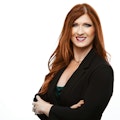
Pamela Maragliano, DMD, is the chief editor of Dental Economics. Based in Salem, Massachusetts, Dr. Maragliano began her clinical career as a dental hygienist. She went on to attend Tufts University School of Dental Medicine, where she earned her doctorate in dental medicine. She then attended the University of California, Los Angeles, School of Dental Medicine, where she became board-certified in prosthodontics. Dr. Maragliano owns a private practice, Salem Dental Arts, and lectures on a variety of clinical topics. You may contact her at [email protected].
 Brian B. Nový, DDS
Brian B. Nový, DDS, is the chief dental officer of the Alliance Dental Center, Massachusetts Public Employees Fund. He served as president of the National CAMBRA Coalition and is currently the consumer representative to the United States Food & Drug Administration Dental Products Panel. His awards include the American Dental Association (ADA) Adult Preventive Care Practice of the Year, the Academy of General Dentistry Weclew Award, the Dugoni Award, and the ADA Evidence-Based Dentistry Practice Award.
Related
 Getty Images 1308948297 Sma
 Dreamstime M 219990289