The true-to-life crown has finally gone digital
Key Highlights
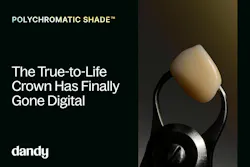
- Polychromatic Shade™ technology digitally replicates natural translucency, chroma, and texture, ensuring consistent aesthetic results in zirconia crowns.
- Digital design previews enable dentists to verify anatomy and fit virtually before milling, reducing surprises at delivery.
- The combined workflow of digital design and shading technology allows anterior crowns to be produced at a lower cost, comparable to posterior restorations.
- Early evaluations show 70% of dentists prefer Polychromatic Shade™ crowns over traditional boutique options, highlighting its aesthetic advantages.
Every dentist restoring an anterior tooth with a zirconia crown has lived through the same moment: photos are taken from multiple angles, notes are sent to the lab describing exactly what the surrounding teeth look like, and the case is submitted. Then the crown comes back, and it's close. Not wrong, but not quite right either. The incisal edge doesn't have the same glassy translucency as a natural tooth, the surface lacks the same depth and warmth, or the color shifts too abruptly from body to margin instead of blending the way it should. The dentist is now deciding whether to seat something that's "good enough" or send it back, restarting the lab cycle and asking the patient to return for yet another appointment.
The problem isn't a lack of effort on the dentist's part, or a lack of skill at the lab. A natural tooth is a moving target: translucency shifts as light passes through enamel, chroma deepens near the gumline, and texture varies from edge to edge, all under the exact lighting of the operatory, against the specific characteristics of the patient's actual teeth. None of that transfers cleanly into a photograph. A photo, however well-lit and well-annotated, is a two-dimensional record of a three-dimensional, light-interactive surface, and a technician working from it is reconstructing that chairside moment secondhand, in a different room, under different lighting. Even meticulous documentation runs into that ceiling.
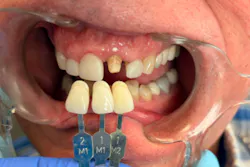
For the anterior cases where this matters most, closing that gap has historically required a master ceramist, someone who has spent years learning to interpret photos and notes well enough to fill in what they couldn't show, and who hand-characterizes translucency, chroma, and texture into the restoration accordingly. That skill carries a real cost: typically 2 to 4 times what a standard zirconia crown runs, plus the added turnaround time that hand characterization requires.
Confirming the result before it's ever milled
Aesthetics isn't the only variable that used to require guesswork before a crown was fabricated. Crown contours, contacts, and morphology have historically carried their own version of the same risk, an issue that wouldn't surface until the crown was already back from the lab. Digital tools, such as Dandy's 360-degree Digital Design Preview, have largely solved that piece, allowing the dentist to rotate the case, check anatomy against the adjacent and contralateral teeth, and confirm the overall design in a virtual environment. Live collaboration with a lab technician goes further still, letting dentist and technician refine restorative designs together in real time rather than trading photos back and forth and hoping the next revision lands closer.
That combination has meaningfully reduced the "unforeseen problems" that have historically complicated anterior cases, the kind of contour and fit surprises that used to only surface at the delivery appointment. But contour was never the piece that required a boutique lab. The optical qualities of the tooth were. A crown with flawless anatomy still reads as a crown, not a tooth, if the translucency, chroma, and texture aren't right.
Where the remaining gap closes
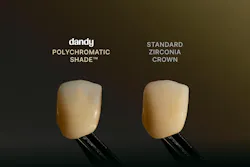
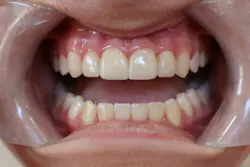
That's the specific problem Polychromatic Shade™ technology, a newly available digital staining process for monolithic zirconia, is built to solve. Rather than relying on a technician to interpret a photo and hand-characterize a match to the surrounding teeth, the process builds translucency, chroma, texture, and shade into the restoration through a digitally controlled, multi-phase system, replicating the natural gradient from a glassy incisal edge to a warmer, denser gingival third that has always been the hardest thing to standardize. Because the process is digital rather than manual, the result doesn't vary based on which technician is at the bench that day.
Paired with a Digital Design Preview and direct lab collaboration, the workflow now closes both halves of the anterior crown problem in a single case: fit and anatomy confirmed before milling, and the full range of optical characteristics engineered for consistency rather than reverse-engineered from a photograph. For a restoration in the anterior, where success is judged against the teeth next to it when the patient smiles, the clinical advantages of that combination are difficult to overstate.
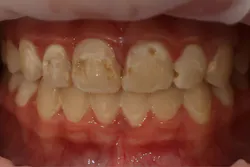
What changes at the chair
The practical shift for dentists is straightforward. Anterior cases that once required routing to a higher-priced specialty lab and absorbing a longer, less predictable turnaround can now be completed at $99 per crown, a price that has historically been reserved for posterior cases with minimal aesthetic demands. In early blind evaluations, 70% of dentists preferred a Polychromatic Shade™ crown to a standard zirconia crown from a leading boutique lab,¹ a meaningful result given that the boutique crown costs 2 to 4 times more.
For dentists who have spent years managing the trade-off between affordability and confidence in a zirconia restoration's aesthetics, this shift is a practical one: digital confirmation before milling and a digitally engineered result at delivery mean a predictable outcome they can plan around, with what shows up at delivery matching what was planned at the chair.
Dentists interested in evaluating the technology can request a free sample crown here or by calling 315-925-6206. Practices that partner with Dandy for restorative cases are also eligible for a free, no-risk intraoral scanner to simplify digital workflows from scan to final restoration.
¹Based on results from a Dandy internal blind comparison study involving 30 dentists.