October 2026 Pearls for Your Practice
Key Highlights
- Quick-Stat Free: A clear 25% aluminum chloride gel that controls bleeding quickly without staining, making it useful for crown preps, impressions, and bonding
- InnerView: Combines quantitative percussion diagnostics with AI to provide objective data on tooth structural integrity and help identify potential cracks or compromise
- ReLeaf Suction Device: A hands-free HVE system that combines suction, cheek retraction, and isolation to improve visibility and reduce the need for constant suction repositioning
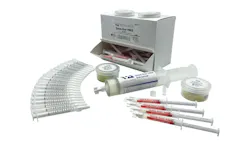
Quick-Stat Free by Vista Apex
There are few things in dentistry more annoying than bleeding at the exact moment you need everything dry. Margins are clean. You are ready to bond. Everything looks good. Then tissue decides to get involved, and suddenly you are chasing hemostasis instead of placing your restoration. It slows you down, clouds your field, and makes what should be a clean, efficient procedure feel messy.
That is why I pay attention to hemostatic agents. Not all of them are created equal.
Quick-Stat Free from Vista Apex is one of those products that just works. Vista is one of my favorite companies because they tend to make things that are practical and clinician focused. Quick-Stat Free fits that pattern perfectly, all at a budget-friendly price.
This is a 25% aluminum chloride gel that is completely clear. That matters more than people think. A lot of hemostatic agents leave staining or residue that can interfere with esthetics or bonding if you’re not careful. Quick-Stat Free controls bleeding without staining the tissue or the tooth, which makes it ideal in the esthetic zone where everything is under a microscope.
Speed is another big advantage. The formulation is designed to penetrate tissue effectively and promote coagulation quickly. In many cases, bleeding control happens almost immediately, which lets you move forward instead of waiting around and hoping things settle down.
The handling is excellent. The gel consistency stays where you place it without running all over the field. It is delivered in preloaded syringes with applicator tips that make placement easy and controlled. Cleanup is simple too. It rinses off easily and does not leave behind a mess, which is a big deal when you are trying to maintain a clean bonding surface.
In practice, this is something I reach for during crown preps, impressions, and any time I am working near the gingival margin. It is especially useful when you are trying to get a clean scan or impression and tissue keeps getting in the way. Having something predictable that controls bleeding quickly and stays out of your way makes a big difference.
This is not a flashy product. It does not promise anything revolutionary. It simply does an important job really well. In dentistry, those are often the products that end up being used the most.
Vista has built a reputation on making products that solve real problems in a simple way. Quick-Stat Free fits right into that category. It makes procedures smoother, faster, and less frustrating.
Clean single up the middle for Quick-Stat Free by Vista Apex.
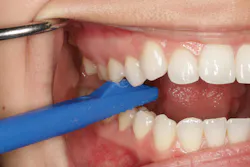
InnerView by Perimetrics
Every dentist has had that patient. They point to one tooth and say, “Something just doesn’t feel right.” You take a radiograph. Nothing. Cold test is normal. Percussion is inconclusive. Maybe you even get a CBCT. Still nothing obvious. You know something is going on, but you cannot prove it. Those are some of the most frustrating cases we see because our diagnostic tools have traditionally shown us anatomy, not structural integrity. That is what makes InnerView from Perimetrics so fascinating.
For decades, dentistry has relied on imaging. Radiographs show us bone. CBCT gives us incredible three-dimensional anatomy. Intraoral scanners show us surfaces with remarkable precision. All those technologies have changed dentistry for the better. None of them, however, actually measure what is happening inside the tooth structure itself. That is the problem InnerView is trying to solve.
InnerView uses Quantitative Percussion Diagnostics, or QPD, combined with artificial intelligence to measure what Perimetrics calls internal mobility. Rather than looking for a crack directly, the system measures how a tooth responds to a series of gentle, precisely controlled percussion taps. Those measurements are analyzed by AI to identify changes in structural integrity that are generally associated with cracks, failing restorations, or other structural compromise long before they become obvious on radiographs or even during a clinical examination.
The procedure itself is remarkably simple. The handpiece gently taps the tooth for just a few milliseconds. The patient feels virtually nothing. There is no radiation involved, and within seconds you have objective data that has simply never been available before. Instead of relying entirely on subjective tests and clinical intuition, you now have measurable information that can support your diagnosis. Better yet, the system tracks those measurements over time, allowing you to monitor changes from one visit to the next.
That trend analysis is probably the feature that excites me the most. Dentistry has always been about finding disease earlier. We diagnose interproximal caries before patients need root canals. We identify periodontal disease before teeth become hopeless. Structural failure has always been one of the last frontiers because we simply have not had a way to measure it objectively. InnerView introduces an entirely new category of diagnostics by giving us measurable information about something that has previously been invisible.
I do not see this replacing clinical judgment. Patients still need comprehensive examinations, radiographs, CBCT when appropriate, and thoughtful treatment planning. What InnerView adds is another piece of objective information that helps explain those cases where your instincts are telling you something is wrong even though traditional diagnostics have not caught up yet.
The best technology in dentistry does not replace dentists. It gives us better information so we can make better decisions. InnerView feels like one of those technologies. It is not another way to look at teeth. It is a completely new way to measure them.
Clean double into the gap for InnerView by Perimetrics.
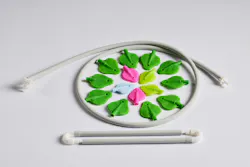
ReLeaf Suction Device
There are moments in dentistry where I wish evolution had given us three hands instead of two. One hand is holding the mirror. The other is holding the handpiece. Meanwhile, I need someone to retract the cheek, control suction, keep the field dry, and somehow not get in my way. It is amazing how much of dentistry is simply trying to manage everything happening in a very small space. That is exactly why I like ReLeaf.
ReLeaf is one of those products that makes you wonder why nobody thought of it sooner. It is a hands-free high-volume evacuation system that connects to a standard HVE line in just a few seconds. Once it is in place, it provides evacuation, cheek retraction, and isolation all at the same time, leaving both of your hands free to actually do dentistry.
The first thing I noticed was how much less juggling I had to do during procedures. Instead of constantly reaching for the suction or asking my assistant to reposition it, ReLeaf quietly does its job in the background. The leaf-shaped mouthpiece provides suction all the way around its perimeter, so it continues evacuating fluids even as the patient moves slightly or changes position. That means a consistently dry field with a lot less effort.
I also think this product may be even more valuable for hygienists than it is for dentists. Most hygienists spend their entire day working without an assistant. They are scaling, retracting, evacuating, polishing, and trying to keep the patient comfortable all at the same time. ReLeaf essentially gives them an extra set of hands, which can reduce fatigue, improve visibility, and make appointments run more smoothly without constantly repositioning suction.
Patient comfort is another pleasant surprise. The mouthpiece is soft, thin, and flexible, so patients tolerate it extremely well. They are not fighting a bulky HVE tip, and they can comfortably rest their jaw during longer procedures. Patients seem more relaxed because they are not constantly trying to avoid the suction or wondering where it is going next.
The efficiency gains are real too. During restorative procedures, hygiene appointments, sealants, and polishing, ReLeaf keeps the field dry while allowing you to focus on the procedure instead of chasing the suction around the mouth. Every minute you are not repositioning an HVE is another minute you are concentrating on delivering better care.
One thing I appreciate is that ReLeaf is not trying to replace your assistant. It is simply handling one repetitive task exceptionally well. Good technology should make your team more efficient, not make them unnecessary. ReLeaf fits that philosophy perfectly. It quietly removes one of the constant little frustrations of everyday dentistry and lets everyone focus on what they do best.
Sometimes the best products are not the ones with the flashiest marketing or the most complicated technology. They are the ones that make your day a little easier every single time you use them. ReLeaf is exactly that kind of product.
Base hit to center field for ReLeaf!
Editor's note: This article appeared in the October 2026 print edition of Dental Economics magazine. Dentists in North America are eligible for a complimentary print subscription. Sign up here.
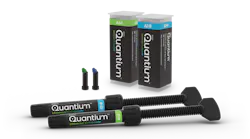 Quantium composite by Bisco
About the Author
 Joshua Austin, DDS, MAGD
Joshua Austin, DDS, MAGD
Joshua Austin, DDS, MAGD, is a graduate and former faculty member of the University of Texas Health Science Center at San Antonio School of Dentistry. Author of Dental Economics’ Pearls for Your Practice column, Dr. Austin lectures nationally on products, dental technology, online reputation management, and social media. He maintains a full-time restorative dentistry private practice in San Antonio, Texas. You may contact Dr. Austin at [email protected].
Updated June 21, 2023