Can you love dentistry without letting it consume your life? Finding wellness and purpose beyond the dental practice
Key Highlights
-
Burnout isn't inevitable: Why dentists need to pause, assess their priorities, and recognize when their professional lives need to change.
-
Selling doesn't have to mean leaving: How Dr. Garceau sold her practice to her associate and stayed on part-time, maintaining relationships with patients and her team.
-
There are alternatives to the DSO route: What dentists should consider when weighing a traditional dentist-to-dentist transition against other ownership options.
- Wellness has a place in clinical practice: How yoga, breathing, mindfulness, and ergonomics can influence a dentist's physical well-being and the patient experience.
-
Your dental degree gives you options: From airway and sleep dentistry to teaching, writing, and other pursuits, a dental career doesn't have to follow a predetermined script.
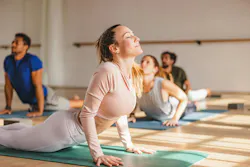




What does a fulfilling dental career look like when you stop assuming it has to follow the traditional path? Dr. Roberta Garceau, DMD, FAGD, CYT, D-ABDSM joins Drs. Pam Maragliano and Brian Nový to discuss the choices that helped her redefine her professional life, from incorporating yoga and Ayurveda into her approach to wellness to selling her solo dental practice to her associate while remaining on as a part-time dentist. She explains why self-awareness matters, how regular check-ins can help dentists recognize stress before it becomes burnout, and why the decision to sell a practice shouldn't be driven by financial expectations alone. For dentists contemplating retirement, scaling back, or simply questioning whether their current professional life still fits, her experience offers another way to think about what's possible.
The conversation also explores the connection between yoga, ergonomics, and patient care; Dr. Garceau's work in airway and sleep dentistry; and the importance of building professional relationships through study clubs and dental societies. Along the way, the hosts get into the realities of practice transitions, the emotional difficulty of handing over a practice you've built, and the idea that dentistry can support a much broader life than the one many dentists initially envision. Plus, there's a little forest bathing, a few ticks, and a reminder that sometimes the most important question you can ask yourself is simply: What do I need right now?
Related reading
 dental-professional-self-care

Episode transcript
When life makes you reconsider what matters (00:20)
Brian Nový: Hey everyone, welcome back to another episode of Dentistry Unmasked. I'm Dr. Brian Nový, and with me, by my side, as ever, as always, is my faithful prosthodontist, Dr. Pam. Hey, Dr. Pam, how are you?
Pamela Maragliano: I'm doing well. How are you today?
Brian Nový: I'm fantastic, because I don't have to go too far today to experience a little bit of, let's just say, I don't know, yoga-esque. I have fond memories of studying yoga in college and falling asleep at 6:30 in the morning. Who teaches a yoga class to college students at 6:30 in the morning? But I woke up many times asleep in that classroom, and I have fond memories of sleeping through class and getting an A in yoga class.
Today, we have someone who's going to talk to us about how yoga and dentistry can combine. Somehow. That's not even the best setup for you, Roberta. Dr. Roberta Garceau, thank you for coming to Dentistry Unmasked.
Pamela Maragliano: Roberta, this is kind of cool because if you read Dental Economics, which, obviously, hopefully you do, she's been contributing to DE for a while. It's sort of like meeting the pen pal that you've been writing to for a long time. I'm so happy to have you here, and I'm excited to hear your story. Would you lead with that and start with your transition with your practice?
Roberta Garceau: Sure. Thanks so much for having me. I'd love to share that. Health is wealth, right? And so, we were really talking about both.
So yes I'm a dentist, a comprehensive general dentist. I'm also a diplomate with the American Board of Dental Sleep Medicine, and I'm also a certified yoga and Ayurveda instructor. I combine all those loves and passions into one comprehensive, holistic approach to wellness, which is Elemental Wellness. That's my registered trademark approach to wellness.
Personally, how this fell into place for me was last year, after my mom passed. I realized, where did I want to be? What were my goals? What really mattered to me? It all comes down to that self-awareness. I realized that while I was a solo practitioner and owned my own dental practice, I wanted time for other projects, like writing, speaking, teaching, and also for family, friends, and myself. So I decided to put my practice up for sale. I did the whole thing with a broker, and it ended up being that my very part-time associate, who was only working for me a half a day once or twice a month, was looking for a position. She was working full-time someplace else but felt more alignment with our practice.
So we switched roles. I sold to her, and I became her part-time employee. I'm in the office two to three days a week, really focusing on alignment and sleep, and helping patients with apnea and snoring. It was a beautiful way for me to realize what was important.
Pamela Maragliano: I've got so many things I want to talk about. First things first, I'm sorry for your loss. I had a loss last year. I lost my dad, and then shortly after, I discovered my husband was cheating on me, so I got a divorce. It's interesting that we have to have these major life events to realize that something has to change. During COVID, I had time to think, and I changed everything about my practice because I had time to reflect. I always try to encourage people not to wait until something major happens to seek happiness.
How do you encourage people now? We don't want people to have to have something terrible happen to then decide it's time to find their true North Star. How do we find our happiness without having to have a disaster first?
Roberta Garceau: Exactly. One thing is that as dentists, a lot of us tend to be ... We chose dentistry because our minds are very busy. Having a schedule, having a team who supports us, and having a task to focus on helps us keep our busy minds busy.
But sometimes, you may know dentists like this yourself, some of us also just choose to keep going, keep going, and never pause to check in. And there's where the trouble is. I have a colleague who's in his 80s, and he continues to practice orthodontics because he feels like it keeps him young. That's his personal choice. I also know a colleague who neglected his health for way too long, and when he finally did retire, he's had nothing but joint issues, body issues, and cancer. We just can't keep going and going and going on automatic without checking in with ourselves.
The bottom line is pausing. Whether you give yourself a retreat at home or a day off, when you're like, "I'm just going to shut off my devices, and I'm not going to check in with social media, and I'm really just going to take time for myself." For me, that usually involves getting outdoors and moving in nature. That helps to clear my mind. It's a beautiful thing to put on your calendar every now and then, every quarter, every month, however often you can make it happen. But even on a daily basis, pause and check in with yourself. Notice what's going on with your body, with your breath, because you're exactly right: We don't want to wait until it's a disaster and we're like, "Oh my gosh, now I've got to make a really big change."
We can do damage control by checking in regularly. That's what we do in the office, right? We hopefully don't wait until things are completely off the rails, our schedule is a mess, and our systems are all broken. We do little check-ins along the way. Maybe you watch your key practice indicators, whatever you're doing to monitor things. You can do the same with your own health and wellness. Check in. What do I need right now? Like, Brian needed something warm and something cold to drink. That was great self-awareness, to prepare and plan for that. "Hey, I may want one of each, so I'm going to have both."
Knowing that you've got a long procedure, maybe you want to use the restroom beforehand or have a little bit of a protein snack so that you don't start to get distracted in the middle of it. Maybe you're thinking, "Oh my gosh, I'm up to here with team issues or financial issues." Maybe you just need to go outside and walk around the block and get a breath of fresh air. Whatever it is, checking in and asking, "What do you need right now?" is the number one question. You can ask yourself multiple times throughout the day. That really goes a long way for damage control, self-regulation, and self-care.
Dentistry doesn't have to follow one career path (07:55)
Brian Nový: I love that concept, and I think so many dental students and young dentists need to hear it. You can start doing this before you graduate dental school, to really check in with where you want to take your practice experience.
It sounds like you didn't graduate from dental school thinking, "I'm going to do sleep medicine and yoga and Ayurvedic stuff," right? That kind of developed over time. I think we all go down this path of, "I'm just going to go be a dentist," because we have this mindset of what a dentist is. Then you realize your mindset was very, very narrow-minded. I didn't realize you could do all these other things and go anywhere you want, because your services are in such need. You really have the ability to go anywhere and live in any situation, in any setting, and do things on the side because dentistry can always pay the bills.
I don't think we give that message to dental students enough. You're handed a wonderful gift when you get your dental degree. Now just go use it to the best of your abilities.
When was it for you? What started that? How soon after beginning on the traditional career path of dentistry did you start doing sleep medicine? Did you do yoga first? Did you do Ayurvedic medicine first? I know so many physicians who've given up being physicians to go be yoga instructors because they can't take the stress.
Roberta Garceau: You can be both. There's the good news.
Brian Nový: Yeah.
Roberta Garceau: And we can share it with our patients. I would say I took a more traditional approach, learning comprehensive dentistry, going to all the institutes, the Pankey, the Dawson, becoming a fellow of the Academy of General Dentistry, and really just pursuing a lot of continuing education.
What I think happens for many of us over time in dentistry is we gravitate toward the things that we do well and that we enjoy. Those are going to be the things that we do best and are rewarding personally and financially. Over time, I had a hygienist who said to me, "You know, there really aren't that many videos online for dental professionals as far as yoga and stretching and helping ourselves ergonomically. Why don't you make some?" I'd been dabbling in yoga on the side, and I was like, "Well, I'm not a yoga instructor." And she's like, "That's okay, it's YouTube. You don't have to be." But what happened was, over time, I was really called to become a yoga teacher. It's like, I don't have time for this. I had a young family, a solo practice, and I was a practitioner in my practice. How am I going to leave my practice for a month to go be a yoga instructor? But I did. I found a way to break it up into two 12-day modules and was really drawn to it.
What I've found over time is that yoga has really helped me, not only physically and ergonomically, to strengthen my core and protect my back. We get into some really compromising positions in dentistry. But it's also helped my mind. I noticed I was having a much greater sense of calm and ease. Not that I don't ever get worked up, but it definitely helped me to self-regulate a whole lot more.
Mel Robbins had something out recently about the energy you bring into the world and that you carry throughout your day. Truly, when we're taking better care of ourselves through whatever means—mindfulness, meditation, yoga, lifting weights, whatever it is that you do to stay well—we bring that energy to our patients and our team, and everybody can have a more comfortable, more relaxed visit. I get compliments all the time. A patient left yesterday after having a whole quadrant of restorative dentistry, and she told my assistant, "I feel so relaxed with you two. You work so well together. You help me to be comfortable. I trust you."
These are the things we want to hear from our patients, and that's what makes it worthwhile. It doesn't matter at the end of the day that you made a gajillion dollars or half a gajillion dollars. We're all in a profession where we can make a good living, and so for me, it's more important to be in alignment with myself, my purpose, and my vision in life.
That's really what I want to share with the students coming up, as well as seasoned practitioners. If you're a guy in his mid-80s and you truly feel like you love doing orthodontics, and that keeps you alive and vital, that's your choice. If you're a woman in her 50s and say, "You know what? I still love dentistry. I'm not ready to give it up, and I have these other projects and passions, and I want to live my life because none of us has a crystal ball." I don't want to wait for an illness or an injury, whether it's myself or my husband, and all of a sudden, those travel plans, those someday plans, don't happen the way you thought they might. I want to live my life today, so I made the choice to sell my practice and practice part-time.
Like you were saying, Brian, we have so many options as dentists. We can work part-time, we can work different hours of the day or days of the week, and it really all comes down to what's the best choice for you.
Pamela Maragliano: I attribute yoga to a lot of my successes in life. I know for a fact I'm board-certified because of yoga, I feel like, in prosthodontics, because I would stress myself out. I think we all have imposter syndrome from time to time, and if it wasn't for yoga and breathing techniques, I was able to keep it together and actually enjoy the board process, which is weird.
I think it's definitely something we should all get into. Here we are talking about yoga. I love yoga, you love yoga, so that's our thing. But you should have a thing.
It doesn't necessarily have to be yoga, but some sort of outlet for energy and wellness, mental clarity, relaxation, and all of those things.
Selling a practice without walking away completely (15:22)
Pamela Maragliano: I don't want to totally shift gears on the conversation, but I would love to hear more about the transition. You had the ability to sell to a DSO and go that route, but instead, you went the route of a dentist-to-dentist transaction. We've had podcasts about both. There's this sentiment where I think a lot of people who sell to DSOs are looking for this golden egg at the end of it, whether it's immediately or you get half your egg immediately and the rest of your eggs later. There's this sentiment that the doctor-to-doctor transaction might not be as lucrative as the DSO transaction. But you went the doctor-to-doctor route. Would you share why? Obviously, we don't have to talk numbers, but what has that meant for you, and why did you not consider or pursue the DSO route?
Roberta Garceau: I went the route that I went because, for one thing, I wanted to stay on. I wanted to have more of a say as to who was that person I'd be practicing with and who were the team members who would be around me.
I don't have control of hiring and firing anymore. However, me staying on part-time did help with continuity. It helped with team retention and patient retention. From a buyer's perspective, that can be a little daunting. Maybe I don't want the seller to stay. Is the seller going to keep all the patients? Is that not going to work out for me? But in this case, I've really transferred a lot of trust and confidence into the new owner, and that's working out to everybody's benefit. We're all benefiting. Most of my practice now, again, is alignment and sleep dentistry, or sleep medicine, which wasn't even a thing when I went to dental school. We just didn't even know. Women weren't even really included in dental research, let alone did we know anything about sleep and breathing. It's really come a long way.
I thought about the DSO thing, and I read the articles, and I listen to the experts and hear about how, "Oh, you can make so much more. Just hold on to your practice, don't sell it. You'll make more money. Or sell to a DSO, you'll get more money." But I've also been trained from the very beginning that your practice should not be your retirement account. That's not your retirement plan, right? Your practice is extra. That's just your present, your bonus for getting to the finish line and selling your practice. Maybe you go on vacation, maybe you buy something with it, whatever.
I did not want to sell to a DSO because I didn't want that relationship. I wanted to have more autonomy, and I still do have that autonomy and flexibility. There's the whole idea of DSOs being that you get half the egg at the beginning, and then, Pam, you said, get the other half, hopefully, at the end. I wanted to interject: unless the egg has gone rotten in the meantime.
Pamela Maragliano: Right.
Roberta Garceau: We're starting to hear how the trajectory is that DSO, DSO, DSO, corporate, corporate, corporate, and then we learn there's a few cracks in the foundation. There's still a place for the model that I did, and I want to let people know that it is an option.
Whether a DSO is your best bet, great. Whether you're a turnkey dentist, like, "I'm here one day, I'm gone the next. I don't want to have anything to do with it," I know people who do it that way, too. That's a choice. Again, it goes back to your awareness and your alignment. If you don't know what you want and what's important, and what your vision is, how are you supposed to make one of the biggest life decisions you're ever going to make? We need to take care of ourselves and be aware of ourselves.
For me, selling dentist to dentist and staying on is a bit unusual. I will tell you, it was like middle school recess. The gossiping! Grown-up people were talking about me behind my back and saying things that weren't true. It was really... You just had to hold your head and your chin up and be like, "Okay. That's about them. This is not about me."
Six months later, now I have these people coming up to me and saying, "Hey, you know, looks like things are going really well. Can I talk to you about that? I'd like to scale down in my practice. Can I talk to you about that thing, about selling and staying on? How's that working? How's that going? It seems like it's going well for you guys."
Just as you were saying at the beginning, Brian, when we graduate from dental school, we may have an idea in our minds about what being a dentist is. Then we live that life and find out it can be so many other things, too. The same with retirement or practice transition. It's not necessarily one thing. There are so many options, and I'm grateful to have the option to still practice, to still use a handpiece now and again, not all day long anymore, and not every day. It's great—the flexibility, the autonomy, and the joy. It's a wonderful option to be able to sell. You just need to be able to set your ego aside.
For those who have been parents or who have grown your own dental practice, it's tough. I was giving up my baby, my dental practice baby, for adoption. But I still had visitation rights, you know what I mean? I was still there. I still got to be in it. I'm like, "Wait, what's my role? What's my role?" It was tough. I'm not going to say it was, like, poof, easy. But over time, I learned it's okay. The new owner is seeing my former patient for that procedure. I can still go give them a hug and ask them how things are going. They got married, they had a grandchild, they got retired, whatever happened. I can still have that relationship and still let things move on.
It's really a nice thing because I feel like my patients are so well cared for, and my team is well cared for. That was another issue. I don't want to practice full-time anymore. How am I going to take care of my patients, my practice, and my team members when I'm not there quite enough? We can only pull back so much, and then we're not there enough. The patients complain, or it's hectic when we are there, or we're just not present. I knew I needed to make a choice, and this selling and staying on was a beautiful option.
Read more: 3 ways to monetize all or part of your practice value today
Brian Nový: So when you say you're doing sleep dentistry, are you doing, like, sedation dentistry and still... in big cases, or are you doing more, like, airway stuff?
Roberta Garceau: Airway. Thanks for that question. No, I don't do sedation. In the state of Connecticut, where I practice, it's actually gotten more difficult with site inspections and regulation. It's a whole thing, and it's becoming a bit of an access-to-care issue, or people just go to centers instead of to their regular dentist.
But I deal with airway, which is in such alignment with yoga, and alignment with clear aligners, and breathing. It's all connected, right? It's about educating patients. "Hey, did you know we're supposed to breathe with our noses? Not our mouth!" "Like, I didn't know that!" We have these conversations every day. Nobody told us. Breathe like a baby, you know? In order to drink, babies have to get their tongue to the roof of the mouth, they need to close their lips and breathe through their nose. So, breathe like a baby. Breathe like a baby where the belly comes up and down. It's not like trying to be sucked into their pants, you know, and cinching up that belt buckle again. Babies just breathe from their bellies. It's a really cool kind of thing.
Finding the right associate—and a potential successor (23:40)
Pamela Maragliano: That's awesome. We've got kind of the gamut of people who listen to our podcasts, but I would like to get your thoughts on something. It sounds like, in a way, there was some serendipity involved. Having your buyer right there in your practice is an amazing thing, but that transition is probably not as uncommon as it somehow feels to a lot of younger dentists.
Were you a mentor to this dentist that you ended up selling to?
I'm imagining a young dentist finishing dental school or finishing their residency and making the decision to go into an independently owned practice versus a group practice or a DSO. While DSOs take a lot of energy in the industry, they're still not the majority of dental practices. How does somebody find a great practice that may have this type of opportunity? It sounds like you didn't come into this agreement initially thinking, "Hey, I might want to phase out down the road," but it still ended up being this beautiful transition.
Roberta Garceau: My particular situation was that I actually fractured my dominant shoulder and the head of my humerus in four places a few years ago. That was an issue, to be in a sling and then come out of the sling after seven weeks and be Dr. Shaky Hands. I was like, "Oh... I am the only producer here." I've taken time off to have babies or go on vacation, but not seven or eight weeks when I can't hold a handpiece.
I really questioned whether I even wanted to practice dentistry anymore. I was like, "Well, I could retire. Nobody would fault me for that. Just go out, you know?" And I realized, no, I still want to do this thing.
How it happened that she came to work for me as an associate: she was already working in a group practice, not a DSO, but a group practice. She was working full-time there, out of her residency, so she'd been there for approximately five or six years. When I was injured and needed help, I just started asking around colleagues in study clubs and dental societies. "Hey, is there anybody? Do you know anybody who might be able to help me out a half a day, a day, just to get me through, to help my patients who can't wait until I can be in the chair again? Do you know anyone who can help?" There were a couple of women who helped me here and there, and my associate was one of them.
After I was able-bodied again and didn't really need her to stay on, I still wanted to keep her on. I knew that even then. She would work for me a half a day on Friday once or twice a month, so that I could kind of guiltlessly be off that day and do whatever else I wanted to do.
What I'd suggest to people who are considering, "Oh, maybe this could be an option," is something that I didn't do so much when I came out of dental school, but in hindsight, I wish someone had told my younger self: do go to the study clubs, do go to the dental society meetings.
At the beginning, I thought, "Oh, there's just a lot of negativity," or, "I don't particularly want to hang out with dentists in my free time. I want to hang out with my other friends." But that's really where you can make connections. It's a beautiful way to find out who might be looking for an associate or who might be looking to sell. You can say, "Hey, can I check out your practice? Maybe we are compatible, or maybe our philosophies are congruent."
Ultimately, that's why she stayed. We never intended that she would be a permanent addition to the team. But she stayed very part-time because something resonated with her. She didn't need to stay for the money or the experience. A lot of times, she was doing hygiene and just very simple procedures. She stayed, and we would go out to dinner every now and then. So, a little bit the mentor that you were talking about, Pam. Not an intentional mentor, but just like, "Hey, as a more senior woman to a woman, what are your thoughts about ownership?" She’d say, "Oh, no, no. I don't want to be an owner. I'm happy being an associate." And she would say to me, "What are your thoughts about retirement?" And I said, "Oh, I don't have a plan, but don't worry, I'll let you know."
Fast-forward down the line, she did want to be an owner. It took her a couple of years to realize that about herself. I was ready to sell the practice, and so it was a bit of serendipity that it coincided. But I truly did not know she was looking until I was on the market. And then it was like, really? It's kind of like the "Piña Colada Song," where they both found out they were looking at the same time.
The AGD Fellowship: Do it while the material is fresh (28:50)
Brian Nový: Well, I have the "Piña Colada Song" in my head. Now, all of a sudden, I have a third question that I want to ask. I have two questions, and we have so little time left. I want to ask you about the process of your fellowship in the Academy of General Dentistry, but I also, just briefly, what do you know about silvotherapy?
Roberta Garceau: About what...?
Brian Nový: Silvotherapy, or Shinrin-yoku?
Roberta Garceau: Not much.
Brian Nový: Okay, well then, never mind that question.
Your fellowship in the Academy of General Dentistry. We don't talk enough about the Academy of General Dentistry on here. We've had ADA presidents on here, but we haven't really talked about the AGD. How long did it take? How long did you work to get your fellowship in the AGD?
Roberta Garceau: I was fortunate because I was in a general dentistry residency at the time, an AEGD, and I stayed for a fellowship a second year, so the credits I got from being in that program directly applied. At the time, there was a practice exam you could take, which also gave you credit. So, in addition to that, plus taking the regular continuing education classes, I was able to build it up pretty quickly. I got my fellowship six years after my dental school graduation.
Brian Nový: Wow.
Roberta Garceau: Yeah. I would recommend just kind of going through it. I credit my program director for saying, "Hey, do it while you're more fresh, rather than waiting until you're three decades out." Not that I would discourage anyone from doing it three decades out, but while some of those questions are fresher in your mind because you just came out of school. Do it closer. Do it right. Just bang it out.
Bliss Not Burnout: A different conversation about professional wellness (30:29)
Pamela Maragliano: Well, I have to thank you for sharing and telling us your story. You're actually sharing even beyond just what you're writing and speaking and podcasting with us. You wrote a book. Would you tell us a little bit about it, and also tell us where we can get it? Where can we learn from you and follow you?
Roberta Garceau: I did. I wrote Bliss Not Burnout, and the subtitle is Hope for Healthcare Providers. It came out of my personal story and personal experience with stress and burnout in dentistry and in life, and I got sick.
I also include stories from hundreds of healthcare providers from different healthcare professions across the country, because I thought it was important to get a more global view of the challenges and the solutions, the successes that people have with staying well. It includes, of course, yoga, Ayurveda, mindfulness, meditation, and all those practices.
You can find it on Amazon, or you can also find it on my website, elemental-wellness.com, which is also a great place to find me. You can email [email protected]. Sign up for some newsletters, find out where I might be presenting or speaking, or about different programs, or just connect with me to work with your practice or your organization.
Brian Nový: Well, I didn't expect this to be so mindful. It was so mindful, and thank you for being part of the message that there is an alternative to burnout. I think our profession is so overshadowed with this notion that everyone's getting burned out, and yet there is so much opportunity for dentists to find not just happiness, but peace in what we're able to do as healthcare providers. I appreciate that you're delivering that message to dentists, that there are other options than just burning out. You can look outside dentistry and still have a fulfilling life as a dentist, as a healthcare provider.
And yet, I'm so excited to be the first one to tell you about Shinrin-yoku, or silvotherapy, which is forest bathing.
Roberta Garceau: Oh, okay. I didn't know if I...
Brian Nový: You go out into the wilderness a lot, so I'm sure that you would...
Roberta Garceau: Yeah.
Brian Nový: I think you'd be all into that.
Roberta Garceau: Yeah, no, I'm more familiar with the concept of forest bathing. I wasn't familiar with that term, so...
Brian Nový: There you go.
Roberta Garceau: Learn something every day.
Forest bathing, ticks, and the great outdoors (33:05)
Pamela Maragliano: Oh, no, no. Now you can't just... What? Bathing in a forest? Like, you take a bath in a forest? Or bathing in leaves? I just had two ticks on me yesterday, so I'm a little... I'm a little...
Roberta Garceau: Having a breakdown.
Pamela Maragliano: What is this?
Brian Nový: Pam doesn't have the best experience with the wilderness. She gets poison ivy jumping off plants onto her, and Pam and I go camping together, so we've been in the depths of the wilderness together. We have. She does very well. She actually does very, very well.
Pamela Maragliano: I'm very rustic when I need to be.
Brian Nový: She is.
Pamela Maragliano: But I'm also a delicate flower. I don't like ticks, and poison ivy is certainly my kryptonite.
Brian Nový: That's true. So, Roberta, do you want to tell Pam about forest bathing?
Roberta Garceau: Well, I don't practice that as much, but in general, going out into the earth, and a lot of times people will practice with their shoes off. That's been my experience more, whether it's the summer or there's snow on the ground and ice, connecting with the elements and with the earth and with nature. That's kind of my experience with that practice, which is congruent with Elemental Wellness, because the elements come from Ayurveda, and we are all made up of them. It's a really cool kind of concept. Brian, what did you have to add about the practice?
Brian Nový: Well, I am a recently certified silvotherapist because I've led a forest bathing session in the wilderness. I'm just an amateur, but I thought you'd be all into it. I would love to forest bathe with you, Roberta.
Pamela Maragliano: Can we forest bathe in Salem? Can we have an office forest bath outside in Salem?
Brian Nový: We can. It might... I'll find a place for us.
Pamela Maragliano: There's some wildness out there, I'm sure.
Brian Nový: Yeah, I think I can find a different place than Salem, downtown Salem.
Bringing it all back to center (34:58)
Brian Nový: Anyway, Roberta, thank you so much for bringing this mindfulness to the conversation today, because you can see we could be all over the place without your...
Roberta Garceau: What was that thing I said about dentists being very busy-minded and stuff? I'll try to...
Well, we've got some breath and some meditation and mindfulness to help with that. We'll bring it back to center.
Pamela Maragliano: Yes. All right, Brian, take us home.
Brian Nový: There's only one thing left to say, and that's... Go put your masks back on. Except for you, Roberta. Just keep breathing through your nose.
Roberta Garceau: That's right.
Pamela Maragliano: All right, everyone, see you next week.
Brian Nový: Bye, everyone.
About the Author
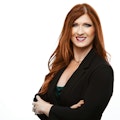 Pamela Maragliano, DMD
Chief Editor of Dental Economics
Pamela Maragliano, DMD, is the chief editor of Dental Economics. Based in Salem, Massachusetts, Dr. Maragliano began her clinical career as a dental hygienist. She went on to attend Tufts University School of Dental Medicine, where she earned her doctorate in dental medicine. She then attended the University of California, Los Angeles, School of Dental Medicine, where she became board-certified in prosthodontics. Dr. Maragliano owns a private practice, Salem Dental Arts, and lectures on a variety of clinical topics. You may contact her at [email protected].
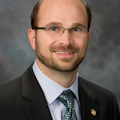 Brian B. Nový, DDS
Brian B. Nový, DDS, is the chief dental officer of the Alliance Dental Center, Massachusetts Public Employees Fund. He served as president of the National CAMBRA Coalition and is currently the consumer representative to the United States Food & Drug Administration Dental Products Panel. His awards include the American Dental Association (ADA) Adult Preventive Care Practice of the Year, the Academy of General Dentistry Weclew Award, the Dugoni Award, and the ADA Evidence-Based Dentistry Practice Award.